A new deck in Naperville usually lands somewhere in the range of a used car to a small kitchen remodel, depending on what you build and where it sits on your lot. For a mid-size composite deck with railings and a set of stairs, most of our Naperville customers end up in the low-to-mid five figures. Wood comes in meaningfully lower, roughly a third to nearly half less on the same footprint, though it costs you back in stain and time over the years.
Every figure on this page is a rough planning range, not a quote. We are not going to pretend a number we published on a Tuesday applies to your yard. Two houses on the same Naperville street can get quotes thousands of dollars apart because one sits four inches off grade and the other sits eight feet up over a slope. What this page will do is show you which parts of the job move the number, so you can read a real bid and know what you are looking at.
The short answer, by project type
Here is how our own Naperville jobs tend to sort out. Approximate, on purpose.
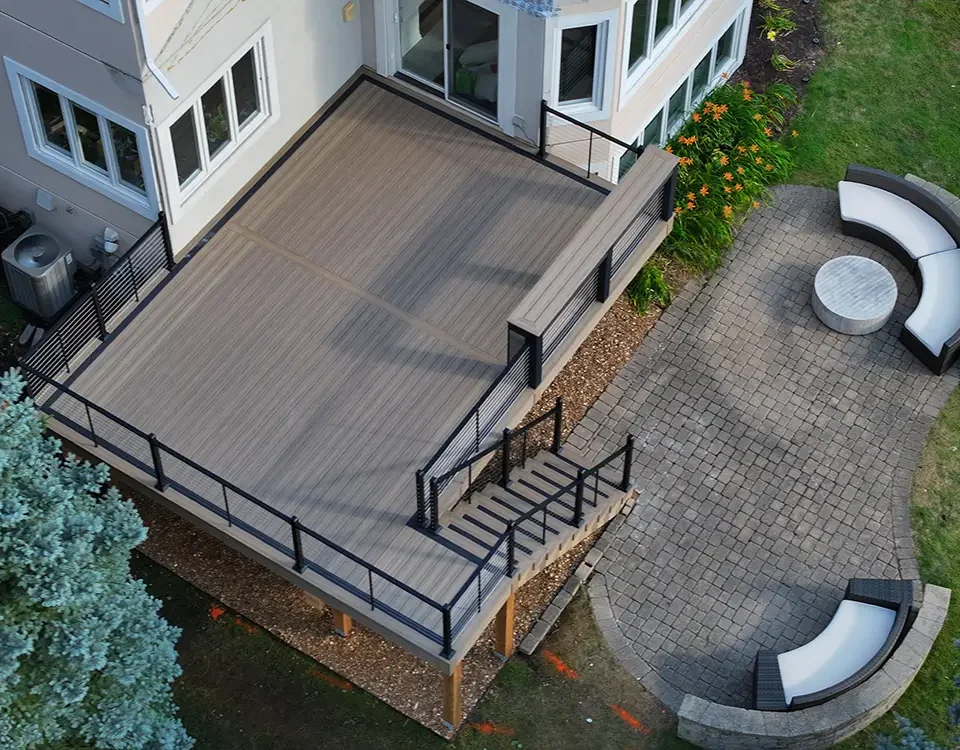
- New composite deck, ground level or close to it. The most common build we do. Think low five figures for a modest footprint, climbing from there with size.
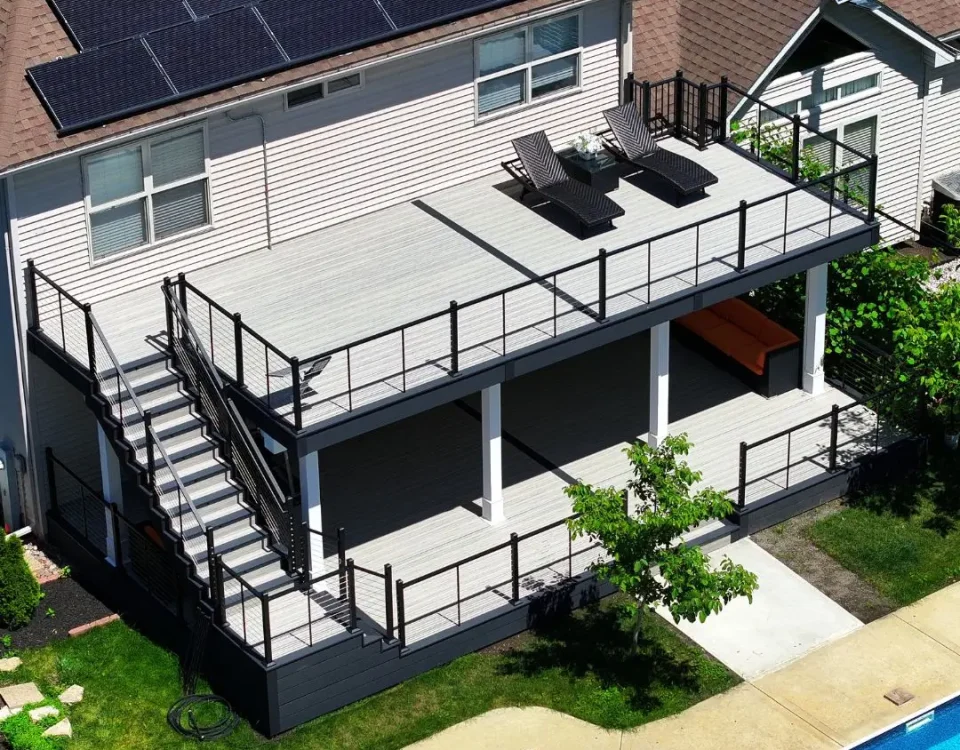
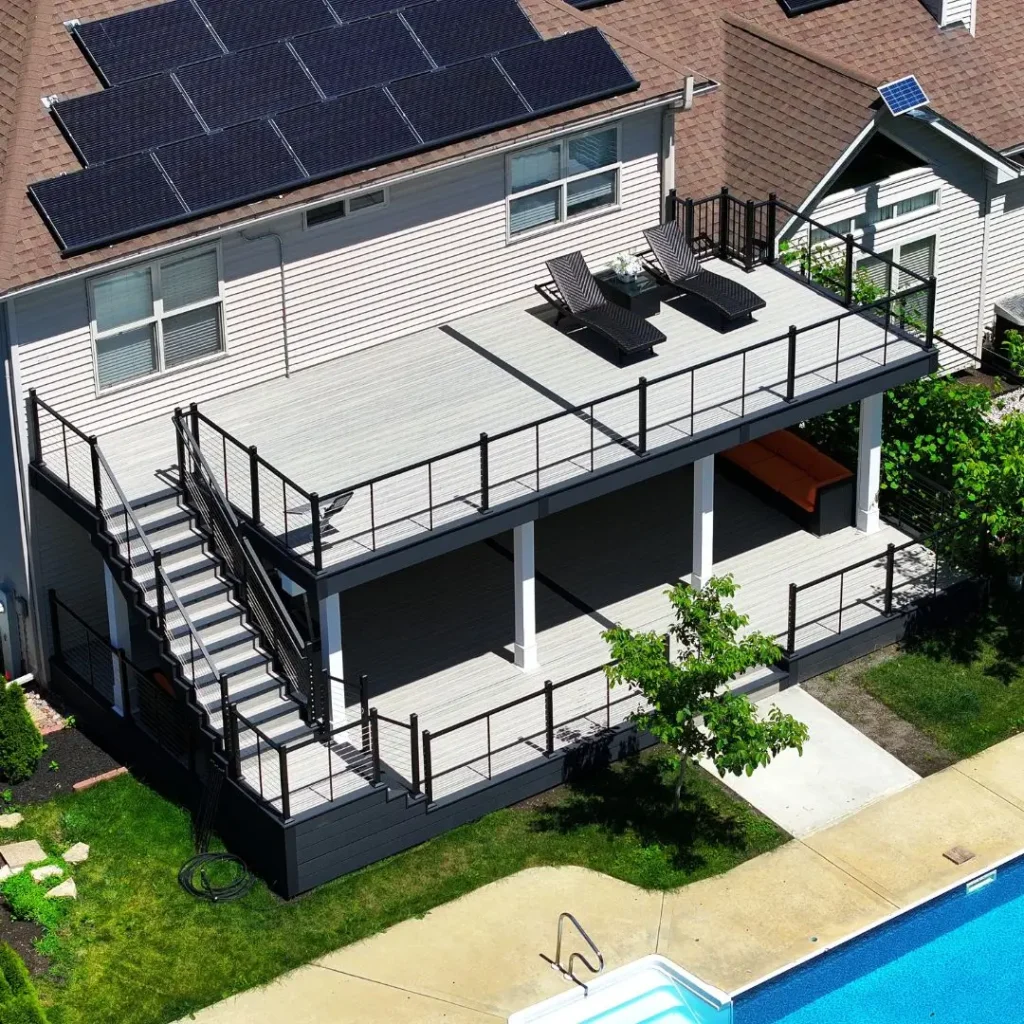
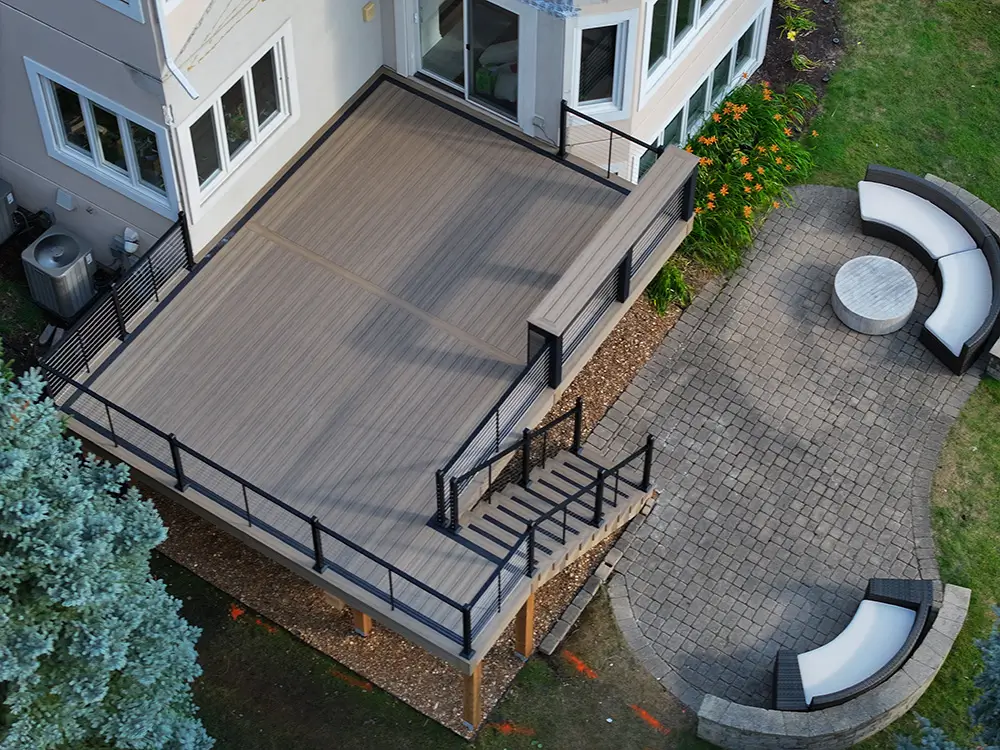
- New composite deck, elevated with stairs. Height is expensive. Once you are up over about six feet you are paying for taller posts, deeper or engineered footings, more railing, and a longer stair run. Budget noticeably above the ground level version of the same square footage.
- New wood deck. Cedar lands well under composite on day one. Pressure treated pine lands lower still. Both start costing you again around year three.
- Deck resurfacing. If your framing is sound and you only need new boards and railing, expect roughly a third of a full rebuild. This is the best value job we sell and we sell a lot of them.
- Deck repair. Rot in a few joists, a wobbly post, a ledger pulling away. Usually a few thousand or less, occasionally more if we open it up and find the flashing was skipped twenty years ago.
- Full replacement. Tear out, haul away, rebuild. Add the demo and disposal cost on top of a new build. It is not trivial, and honest bids show it as its own line.
What actually moves the price in Naperville
Square footage is the number everybody asks about and it is not the number that decides your bid. After a few hundred Naperville projects, these are the things that reliably swing a quote.
How far off the ground you are
This is the big one. A deck sitting a step down from the patio door is cheap to frame. A deck eight feet up over a yard that keeps falling away from the house is a different animal. Taller posts, bigger beams, more railing linear footage, a stair run that might need a landing, and sometimes a soil condition that rules out poured concrete entirely.
We built an elevated composite deck in Naperville on ten steel helical piles instead of dug footings because the slope made concrete a bad idea. You can read how that job went, including why we skipped the concrete. Piles cost more per point than a poured footing. On that lot they were cheaper than fighting the grade.
Where you are in town
Soil and grade are not uniform across 60540, 60563, 60564, and 60565. Lots near the DuPage River behave differently than the flatter subdivisions off Ogden Avenue, and the newer builds in the 95th Street corridor are different again. Footing depth, drainage, and how much dirt we have to move all show up in the price.
Boards
Material is where most homeowners think the whole decision lives. It matters, but it is usually a smaller slice of the total than people expect, because labor, framing, and railing do not get cheaper when you downgrade the deck boards.
Composite runs roughly double pressure treated pine up front. The gap closes somewhere around year eight or nine once you stop buying stain every other spring and stop spending two weekends a year on it. If you plan to be in the house past that point, the math favors composite. If you are selling in three years, it may not.
Wood still has a real case. Cedar and Ipe look like nothing else, and some people want real wood underfoot and accept the refinishing schedule. We build those with hidden fasteners and stainless hardware, because cheap screws rust through in about three Illinois winters.
Railing
Railing is the line item that surprises people most. On a long, narrow deck the railing can approach the cost of the decking itself. Composite railing is the mid option, aluminum runs higher, and cable railing is the one people fall in love with on Instagram and then flinch at on the bid. We broke the options down with real code notes in our post comparing aluminum, composite, and cable railing.
Stairs
Stairs are slow to build and they eat material. Every riser, stringer, tread, and the railing on both sides adds up. A deck with two stair runs to two different grade points is not the same job as a deck with one.
Framing
Pressure treated framing is standard. Steel framing is an upgrade we offer, and it adds real money to the bid. It is worth it on lots where you want the structure to outlive the boards on top of it, and it is overkill on a simple low deck in a flat backyard. We will tell you which one you have.
The extras
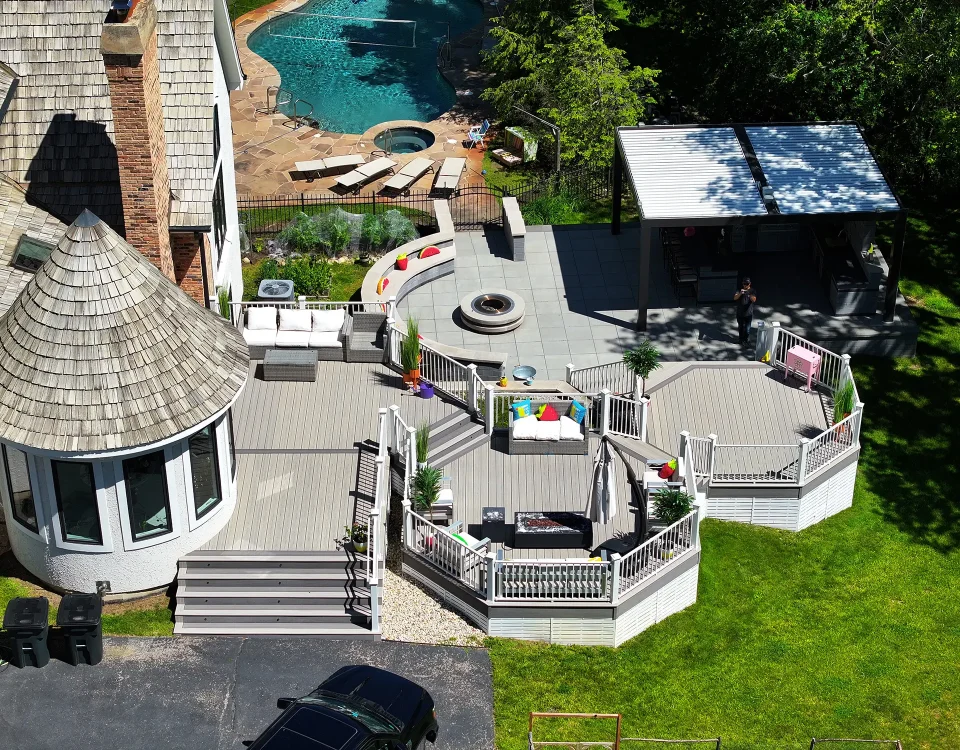
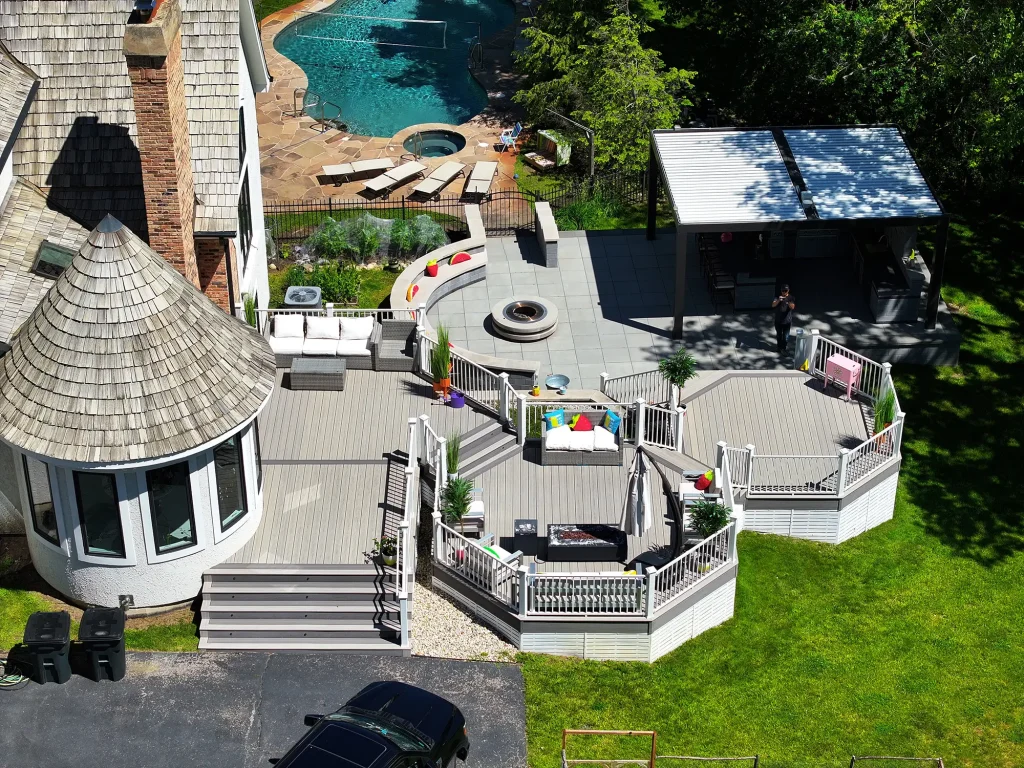
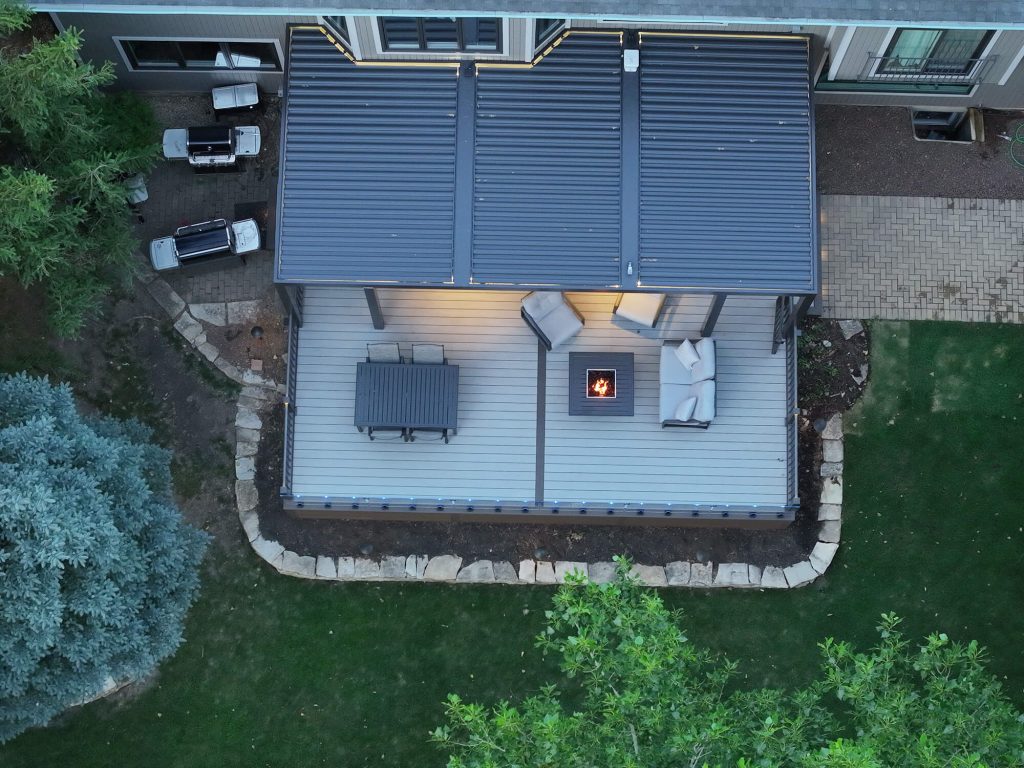
Deck lighting, built in benches, a gate at the stairs for a dog or a toddler, privacy screens, a pergola. None of these are huge on their own. Stacked together they can add a solid chunk to a bid, so decide early rather than at framing inspection.
The costs nobody puts in the ballpark number
These are the ones that turn a comfortable budget into a tight one.
- The permit. The City of Naperville requires a building permit for any elevated deck structure, and for replacing structural or safety items on an existing deck including beams, joists, stairs, and railings. You can read the rules straight from the city on the Deck, Patio and Shed Permit page. Fees are a few hundred dollars on a typical residential deck. Drawings and submittal time cost something too, whether or not your contractor shows it as a line.
- HOA review. Tall Grass, White Eagle, Ashbury, and River Run all want a submittal package before you build. That is a drawing, materials, colors, sometimes railing style. It rarely costs much in dollars. It costs weeks, and a rejection costs a redesign. We wrote up the common reasons for Naperville HOA deck rejections and how to fix them.
- Demo and disposal. Tearing out an old deck and hauling it to a transfer station is labor and dump fees. On a replacement, ask to see it broken out.
- Surveys. Some subdivisions want a boundary survey, not the mortgage survey in your closing folder. Scheduling a licensed surveyor can take a few weeks.
- Grade work and restoration. Sod, dirt, and getting a Bobcat into a fenced backyard.
Why the cheapest quote is usually the cheapest quote
When a bid comes in far under the others, there is almost always a reason, and it is usually one of five.
They are not pulling a permit. This is the most common one. It saves the fee and the review weeks, and the city catches it at resale, which is the worst possible time to find out.
They are framing lighter than they should. Joist spacing at the maximum, minimum footing depth, the cheapest hardware in the aisle. It passes inspection on day one and it moves in year six.
They quoted a lower railing and did not say so. Compare railings before you compare totals.
Demo, disposal, or restoration is not in the number and will arrive as a change order.
They are a sales operation, and the crew that shows up is whichever subcontractor was free that week. Ask directly whether the installers are employees. Ours are, and the lead carpenter who starts your demo is the same person standing next to the inspector at the end.
How to read a Naperville deck quote
A bid you can actually compare should name these things. If a quote is one number on one line, you cannot compare it to anything.
- Square footage and the actual dimensions
- Decking brand and product line, not just “composite”
- Railing type and linear footage
- Framing material, joist spacing, and footing or pile type
- Number of stair runs and risers
- Whether the permit is included and who submits it
- Whether HOA drawings are included
- Demo, disposal, and yard restoration
- Lighting, gates, benches, screens, itemized
- Payment schedule and warranty terms in writing
Ask for proof of insurance before you sign anything, not after. We email ours ahead of the contract, and any deck builder in Naperville worth hiring will do the same.
Timeline, because it affects your budget too
Permitting in Naperville generally runs a few weeks from submittal, and HOA review runs on its own clock before that. Once we are approved, a standard deck is usually about one to two weeks of on site work. Larger builds with a pergola, lighting, or steel framing run longer. If you want to be grilling on it by Memorial Day, start the conversation in late winter. Everyone calls in April, which is exactly when the calendar is full. Our full walkthrough of the Naperville deck permit process covers the submittal and inspection steps in detail.
Is a deck worth it in Naperville?
For most of the homes we work on, yes, though not for the reason people usually give. Resale recovery on a deck is decent and it is not the whole story. The homeowners who are happiest a year later are the ones who built for how they actually use the yard rather than for the listing photo. Where does the July sun land at six o’clock. How many people were at your last cookout. Does the grill live on the deck or off it.
If the budget is not there this year, resurfacing an existing structure is often the smarter move, and a paver patio is worth pricing out on flatter lots before you commit to a deck at all. We would rather tell you that than sell you the wrong project.
Frequently asked questions
How much does a new deck cost in Naperville, IL?
Most Naperville homeowners building a mid-size composite deck with railings and stairs end up in the low-to-mid five figures. Pressure treated wood on the same footprint typically runs roughly a third to nearly half less. Height off the ground, stair count, and railing type move the number more than square footage does. These are planning ranges only, not quotes.
Is composite decking worth the extra cost in Illinois?
For most Naperville homeowners, yes. Composite costs about double pressure treated pine up front, and the difference generally evens out around year eight or nine once you stop staining. It also does not cup or splinter through our freeze thaw cycles. If you are selling within a few years, wood may make more sense.
Do I need a permit to build a deck in Naperville?
Yes. The City of Naperville requires a permit for any elevated deck structure and for replacing structural or safety items on an existing deck, including beams, joists, stairs, and railings. Permit fees on a typical residential deck run a few hundred dollars. We handle the drawings, the application, and the inspection visits.
How much cheaper is deck resurfacing than a rebuild?
Roughly a third of the cost of a full rebuild, assuming the framing underneath is sound. We inspect the structure first. If the joists, posts, and ledger are in good shape, resurfacing is the best value job in decking.
Does steel deck framing cost more?
Yes, noticeably more than pressure treated framing. It is worth it on sloped lots, elevated builds, and any deck where you want the structure to outlast the boards. On a simple low deck in a flat yard it is usually more than you need.
How long does it take to build a deck in Naperville?
Permitting usually takes a few weeks, with HOA review on top of that if your subdivision requires it. On site construction is generally one to two weeks for a standard deck and longer for larger builds with pergolas, lighting, or steel framing.
Do you offer financing?
Yes. We offer flexible financing options and can walk you through them during the consultation.
Get a real number for your yard
The only way to know what your deck costs is to have someone walk your yard, measure the drop from the door to grade, and ask what you plan to do out there. That visit is free and there is no pressure attached to it. Take a look at our project gallery first if you want a sense of what we build, then request a free quote or call the Naperville office.
We also build in Lisle, Aurora, Downers Grove, and across the western suburbs. If you are specifically looking for a deck builder in Naperville, IL, that page has the full rundown of what we do here.
Wolf Spirit Deck
2020 Calamos Ct, Suite 200
Naperville, IL 60563
(312) 765-3998Monday to Friday: 7:00 AM to 8:00 PM
Saturday: 9:00 AM to 6:00 PM
Sunday: 9:00 AM to 5:00 PMServing Naperville (60540, 60563, 60564, 60565), Plainfield, Aurora, Lisle, Wheaton, Downers Grove, La Grange, Hinsdale, Oakbrook Terrace, and the western suburbs.