By Radu Oprea, Owner, Wolf Spirit Deck · Illinois Contractor License #TGC119852 · Naperville, IL · Last updated: July 2026
I have framed decks through enough Naperville winters to know that the material you pick matters less for how the deck looks in the showroom photo and more for how it holds up after five freeze-thaw cycles. Our ground swings from humid, ninety-degree Julys to Januarys that push frost down about 42 inches. A board that behaves beautifully in a milder climate can cup, gray out, or grow mold here in a couple of seasons. So this is my honest rundown of the five materials I actually build with, what each one costs you up front and over time, and which homeowner each one really suits.
If you would rather talk it through with a person than read a spec sheet, that is what we do every day. You can reach the crew at Wolf Spirit Deck in Naperville. But read this first, because knowing the tradeoffs before anyone quotes you is how you avoid overpaying.
1. Pressure-treated lumber
Pressure-treated pine is still the most common decking in the country, and for a good reason: it is the cheapest way to get a structurally sound deck off the ground. The lumber is treated under pressure so it resists rot, fungus, and insects, which are the three things that kill an untreated wood deck fastest.
It handles our seasonal moisture swings reasonably well and takes stain and paint without a fight. The catch is upkeep. If you want it to stay looking like wood instead of weathered gray, plan on cleaning and resealing it roughly once a year. Skip that, and it will check, warp, and split over time. Some homeowners also just do not love that it is chemically treated, which is fair.
Best for: budget-focused builds and homeowners who do not mind an annual weekend of maintenance. If you want to see how a pressure-treated build pencils out against the pricier options, I broke the numbers down in how much it costs to build a deck.
2. Cedar and redwood
Cedar and redwood are softwoods, but they carry natural oils that fight rot and bugs without heavy chemical treatment. They stay more stable than untreated pine when the humidity jumps around, and the grain is genuinely pretty in a way no synthetic quite copies.
They are not maintenance-free, though. You still need to seal and stain on a schedule if you want the color to last, and left alone they will silver over. They cost more than pressure-treated pine and will not outlive a good composite or PVC board. What you are paying for is the look and feel of real wood with fewer chemicals.
Best for: homeowners who want a natural wood deck and accept the upkeep that comes with it. We build a lot of these, and you can see the range on our Naperville wooden deck builder page.
3. Composite decking
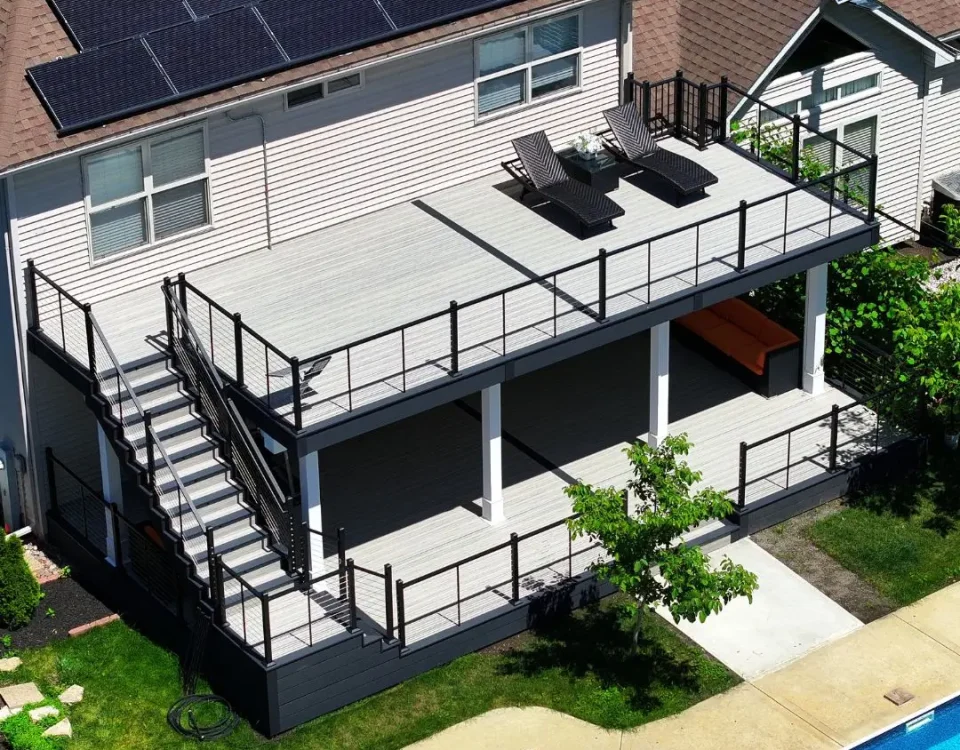
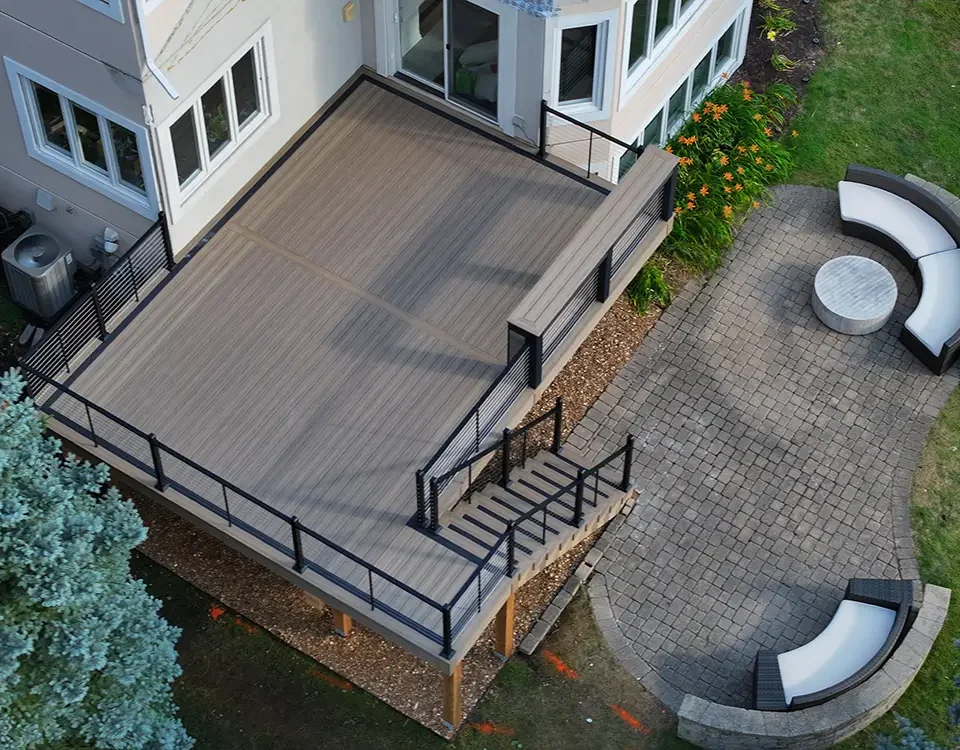
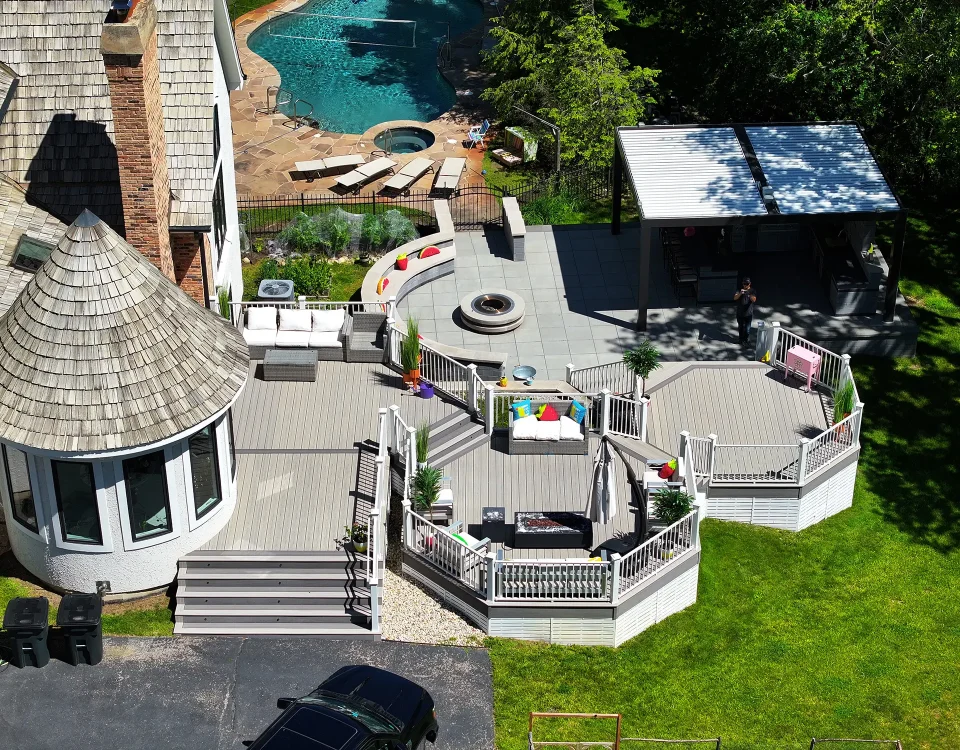
Composite boards are made from wood fibers mixed with recycled plastic, which is why they shrug off rot, moisture, and insects so well. They perform in both our sticky summers and our hard winters, and that combination is exactly why composite has become the material most of my clients ask about first.
The appeal is simple: no staining, no sealing, and a warranty that often runs 25 years or more. Color and texture stay consistent instead of weathering. The downsides are a higher price at purchase, and the fact that a few cheaper lines can fade or grow surface mold in a shaded, damp corner of the yard. Composite can also get slicker than wood when it is wet, which matters around steps.
Best for: homeowners who want low maintenance and are thinking in decades, not seasons. We actually tracked how the major brands aged across the same zip codes in our five-year cedar vs. Trex vs. TimberTech review, which is the closest thing you will find to seeing these boards after real Naperville weather. More build examples live on our Naperville composite deck builder page.
4. PVC decking
PVC is fully synthetic, with no wood content at all, which gives it the best moisture resistance of anything on this list. It will not absorb water, so it is well suited to a freeze-thaw climate like ours, and it resists mold and mildew better than composite.
It is about as low-maintenance as decking gets: no staining, sealing, or painting, and it holds up against fading, staining, and scratches. The tradeoffs are cost and expansion. PVC is usually the priciest board per square foot, and it moves more with temperature than wood or composite, so it has to be installed correctly or you will hear and see the difference. Color options can also be a little narrower. Manufacturers like TimberTech (AZEK) publish their capped-polymer specs and warranty terms if you want to compare the technical details line by line.
Best for: premium builds where easy upkeep and top-tier performance justify the spend.
5. Aluminum decking
Aluminum is the one people are surprised I even offer, but it earns its place on contemporary homes. Properly coated, it will not rot, warp, or rust, and it handles heavy precipitation and big temperature swings without complaint.
It lasts a very long time, easily 25 years or more, and it is fire-resistant and completely bug-proof. It even stays cooler underfoot in direct sun than some synthetics. The reasons it is not more common: the material costs more, the color and texture choices are limited, and it takes specialized skill to install well, so it is not a material to hand to just any crew.
Best for: modern architectural projects and long-term owners who value durability over a traditional wood look.
Quick comparison
| Material | Upfront cost | Maintenance | Typical lifespan | Best for |
|---|---|---|---|---|
| Pressure-treated lumber | Lowest | Annual clean and seal | 10 to 15 years | Budget builds |
| Cedar / redwood | Moderate | Periodic seal and stain | 15 to 20 years | Natural wood look |
| Composite | Higher | Wash occasionally | 25 years or more | Low upkeep, long value |
| PVC | Highest wood-alternative | Wash occasionally | 25 to 30 years | Premium, wet-climate |
| Aluminum | High | Minimal | 25 years or more | Modern, long-term |
How to choose for a Naperville yard specifically
The material is only half the decision. Where you live changes the math, so here is what I tell homeowners to weigh.
Climate. Naperville hands your deck heat and humidity in summer and repeated freeze-thaw in winter. That combination is rough on anything that absorbs water, which is why moisture resistance should sit near the top of your list.
Maintenance you will actually do. Wood needs sealing on a schedule. Composite, PVC, and aluminum mostly need a wash. Be honest with yourself about which camp you fall into, because a beautiful wood deck that never gets resealed ages badly and fast.
Budget against lifespan. Pressure-treated pine wins on day one and costs you in upkeep. PVC and aluminum cost more up front and less over their life. Composite tends to land in the sensible middle. If you want to know whether the deck pays you back at all, I looked at that in does a deck add value to a home.
Look. Real wood has a warmth synthetics chase but never fully match. Composite and PVC give you consistent color and cleaner modern lines. Neither is wrong. It is your backyard.
Local codes and practical realities in Naperville
A few things about building here that affect material and framing choices, not just the surface board.
Permits and current codes. Naperville requires a building permit for deck construction, and the city adopted the 2024 ICC codes that apply to permits pulled on or after April 1, 2026, so the ledger and footing details are stricter than they were even a year ago. Confirm footings, railings, and setbacks before anyone starts digging. I walked through the whole submittal in the real Naperville deck permit process for 2026, including the footing details plan reviewers now expect to see spelled out.
Footings and snow load. Footings here have to reach below the frost line, about 42 inches down, or the deck heaves every winter. The structure also has to carry our snow load, which runs around 30 pounds per square foot in this area, so the framing under a pretty deck surface matters as much as the boards on top. Durable joists, whether pressure-treated or metal, add years to the whole assembly.
Professional installation. For composite, PVC, and aluminum especially, a proper install is what keeps the manufacturer warranty valid and the performance intact. These materials reward experience and punish shortcuts, which is the whole reason the surface board is the last thing I worry about and the crew doing the work is the first.
The honest bottom line
There is no single best decking material, only the best one for your yard, your budget, and how much upkeep you will realistically do. If you want the cheapest path in, pressure-treated pine. If you want to seal it and forget the chemicals, cedar. If you want to stop maintaining a deck entirely, composite or PVC. If you want modern and nearly indestructible, aluminum.
What actually protects your investment is picking a builder who knows local soil, code, and weather, and will still answer the phone in two years. Ask about the season to build, the upkeep each material needs, and how they handle problems mid-project. Straight answers up front are the best sign you are hiring the right crew. If you are in Naperville and want ours, the number is below.
Frequently asked questions about deck materials in Naperville, IL
What is the best low-maintenance decking material for Naperville weather?
Composite and PVC are the two lowest-maintenance options that hold up well to Naperville’s freeze-thaw winters and humid summers. Both resist rot, moisture, and insects and need little more than occasional washing, though PVC has a slight edge on water resistance and price.
How deep do deck footings need to be in Naperville?
Deck footings in Naperville must extend below the frost line, which is about 42 inches deep. Footings set shallower than that can heave during freeze-thaw cycles and pull the deck away from the house over a few winters.
Do I need a permit to build a deck in Naperville?
Yes. Naperville requires a building permit for deck construction, and permits pulled on or after April 1, 2026 follow the city’s adopted 2024 ICC codes. Plan reviewers expect specific footing depth, diameter, hardware, and ledger details on the drawings.
Which decking material lasts the longest?
Composite, PVC, and aluminum all commonly last 25 years or more with minimal upkeep. Pressure-treated lumber and cedar last longer with regular sealing but generally have shorter lifespans than the wood alternatives.
Is composite decking worth the higher cost in Naperville?
For many homeowners, yes. Composite costs more up front than wood but eliminates annual sealing and staining and typically carries a warranty of 25 years or more, which often makes it cheaper over the life of the deck in a climate that is hard on wood.
Wolf Spirit Deck
Owner & CEO: Radu Oprea
Illinois Contractor License #: TGC119852
Naperville Office: 2020 Calamos Ct, Suite 200, Naperville, IL 60563
Phone: (312) 765-3998