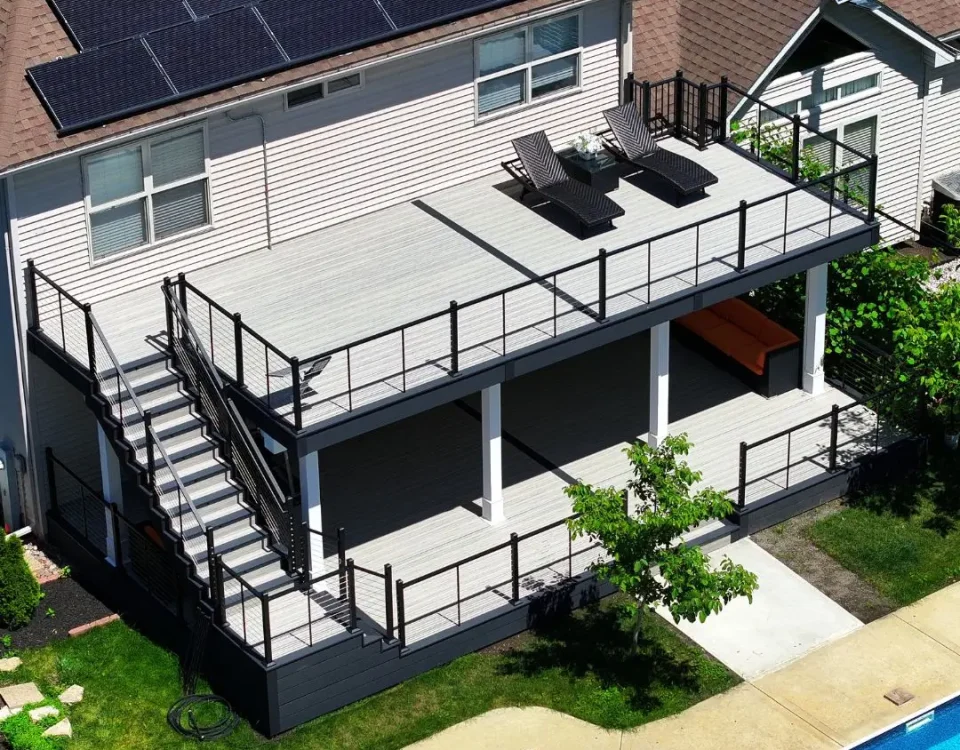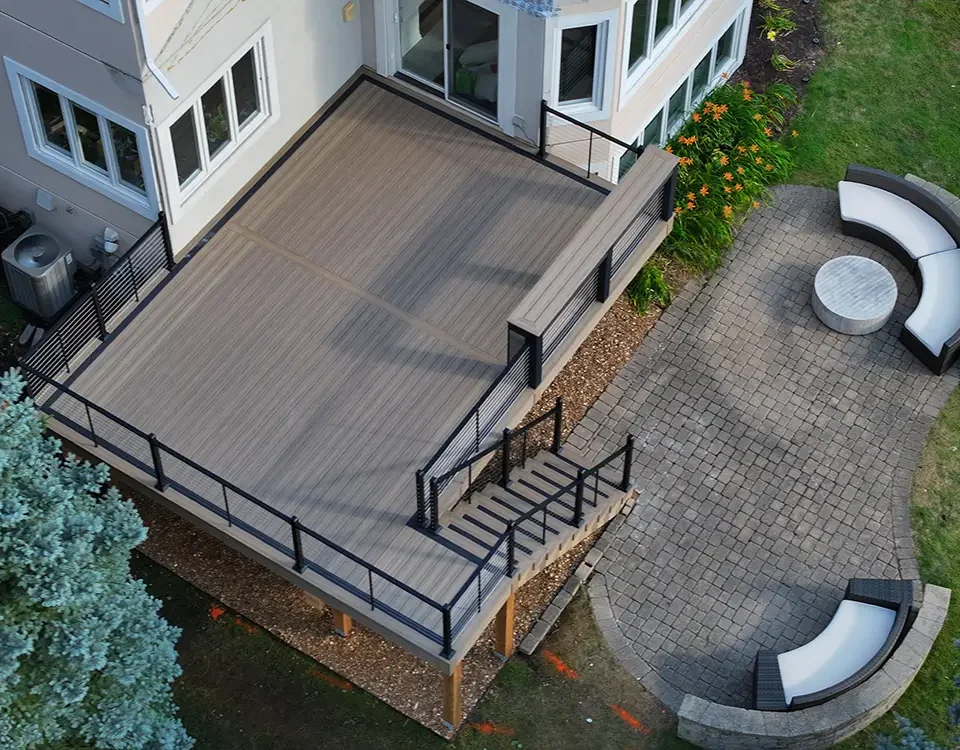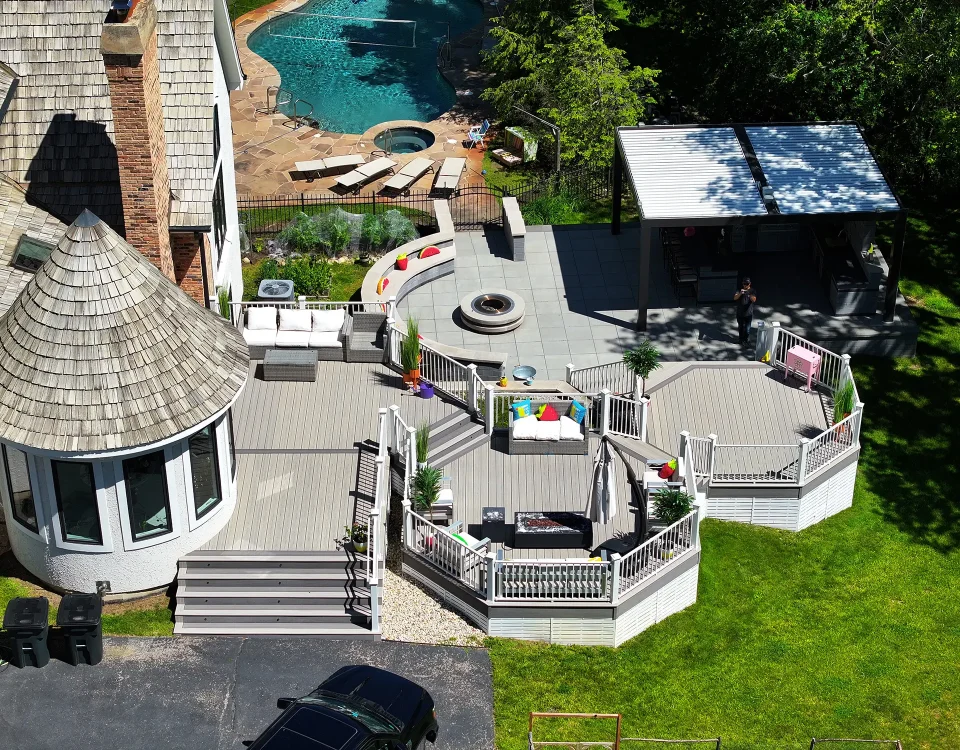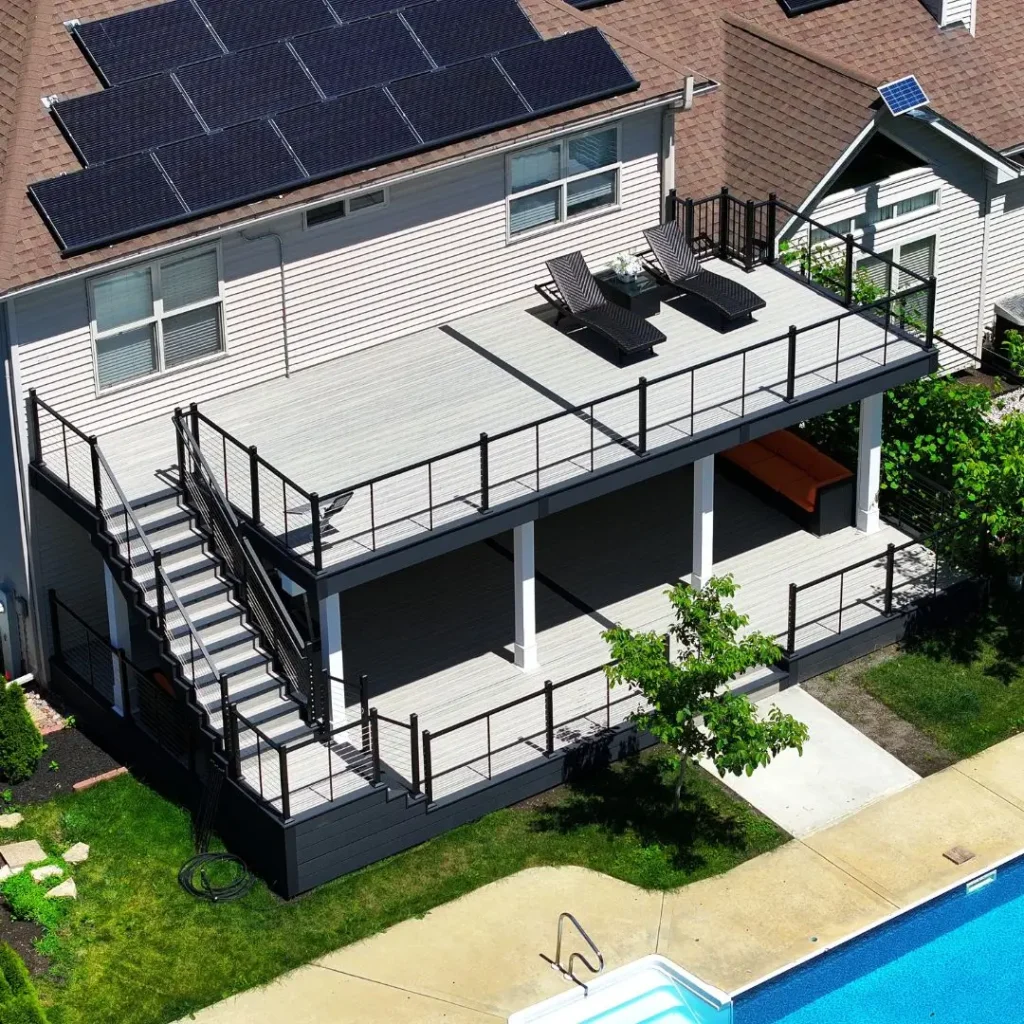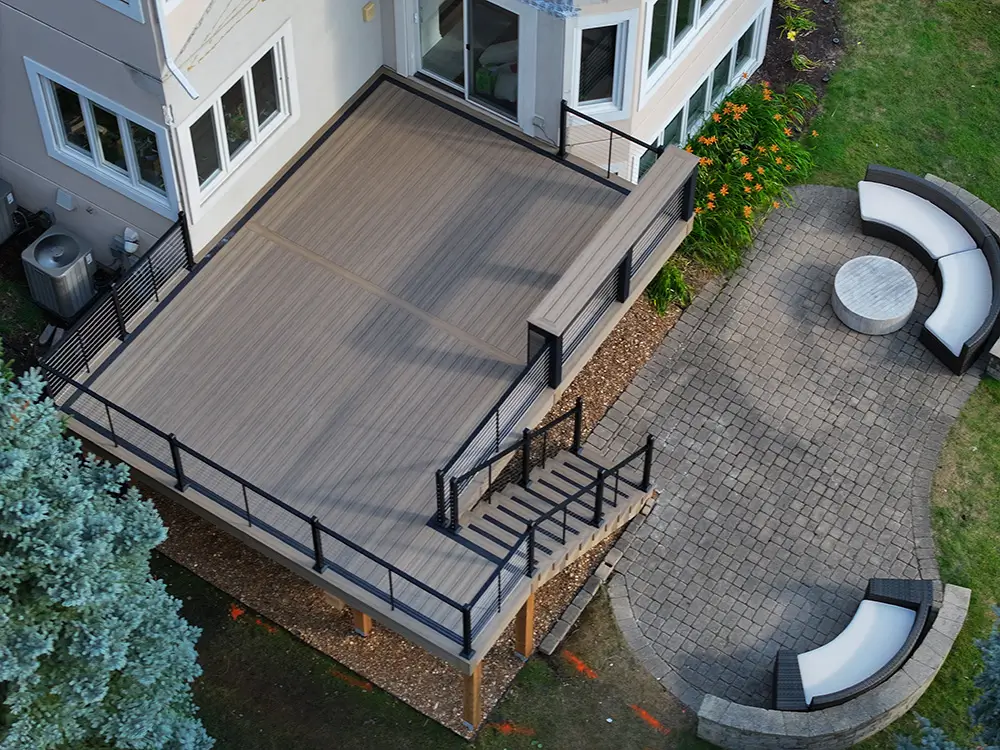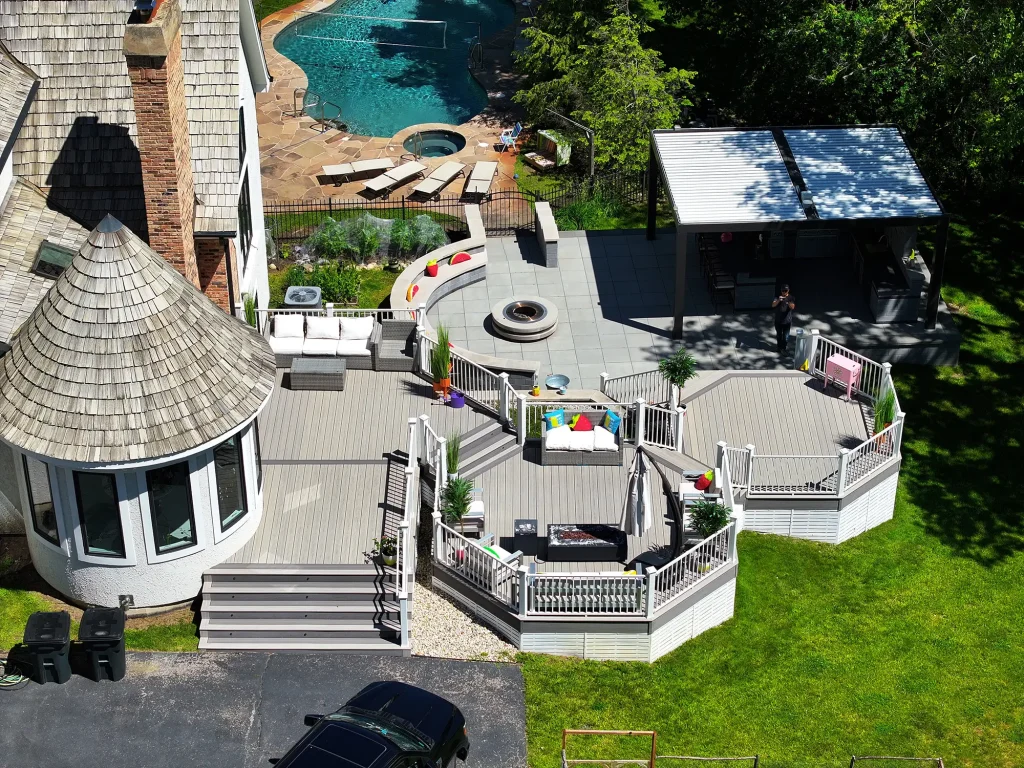
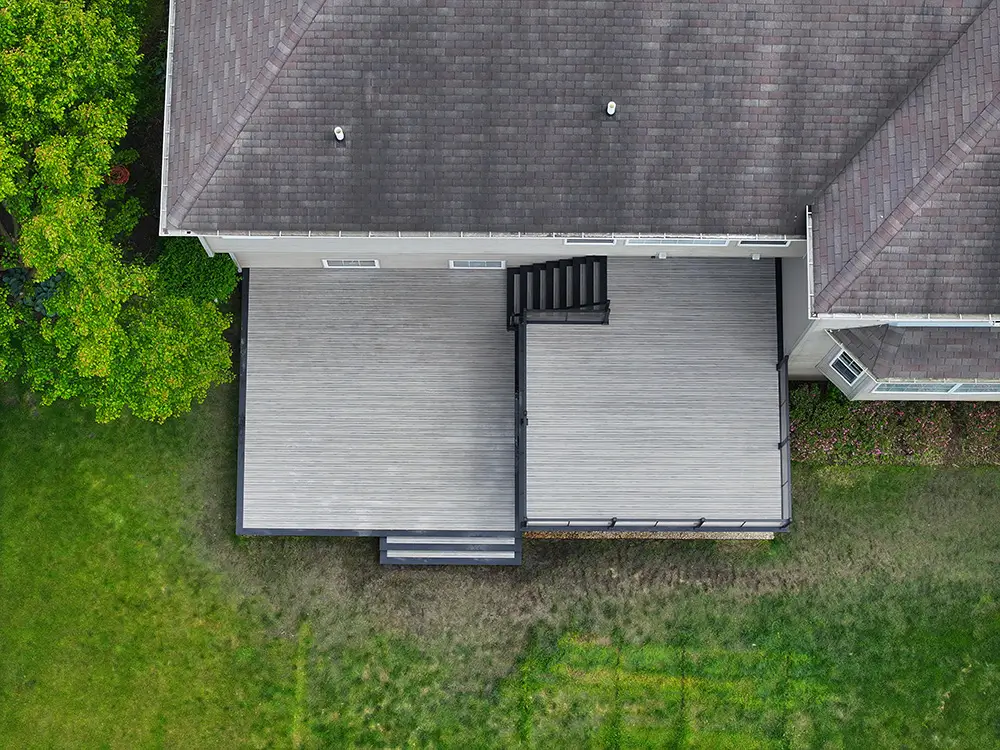
We get the same question almost every week: “Which decking actually holds up in Naperville?” Cedar, Trex, or TimberTech. People have read the brochures, watched the YouTube reviews, and they still don’t trust the answer because every reviewer is somewhere with mild winters and predictable summers. Naperville is not that.
So this year we did something we’d been putting off. We pulled our project files from 2020 and 2021, picked decks we’d built in the same zip codes (60540, 60563, 60564, 60565), and went back to inspect them. Same builder, same crews, similar exposures, similar homeowner habits. As close to a controlled comparison as you get outside a lab.
Twenty-one decks total. Seven cedar, seven Trex, seven TimberTech. Five years of Naperville weather between us and the original install date. Here is what we found.
How we picked the decks
We didn’t cherry-pick. We took every project from 2020-2021 in those four zip codes where the homeowner agreed to let us come out and look, then sorted by material until we had seven of each. A few were south-facing in full sun all afternoon. A few were tucked behind oaks. A couple sat near pools, which is its own category of abuse.
Each deck got the same checklist: surface condition, fastener integrity, framing where we could see it, color shift versus the original sample we had in our files, board cupping or warping, fading, mildew, edge damage, and a moisture reading at three points. Where the homeowner had repair history, we wrote that down too.
If you want the full background on how we approach Naperville builds in general, our Naperville deck builder page covers our process and the materials we recommend by exposure.
Cedar after 5 years: the honest report
Cedar is the material people get sentimental about. It smells right. It looks right when it is new. The seven cedar decks we inspected told a more complicated story.
Two of them looked great. Both were on shaded north-facing yards, both had been re-stained twice (once at year two, once at year four), and both belonged to homeowners who actually swept them. The boards had silvered slightly in spots but no cupping, no rot, no soft fasteners.
Three were in middling shape. Some surface checking, a few boards starting to cup at the ends, and the stain was thin enough that you could see the grain pulling moisture in. The owners had stained them once after the first year and then let it slide. That’s normal. It’s also why cedar gets a bad reputation.
The last two were rough. One had a section near a downspout that had started to rot at the joist contact points. The other had been left untreated for the full five years and the surface looked like driftwood. Not ruined, but the homeowner was going to have to choose between a real refinish job and replacing the worst boards.
Average depth of weathering across all seven, measured by visible silver-out and surface checking, was higher than I expected. Cedar in Naperville moves a lot between the freeze-thaw cycles in February and the humid stretches in August. If you don’t reseal it, the wood loses dimensional stability faster than the brochures suggest.
Where cedar still wins: it ages beautifully when someone takes care of it. The two decks in good shape were honestly some of the prettiest decks I’ve seen all year. Cedar also costs less up front, which matters if you’re choosing between a smaller cedar deck now and waiting two more years for a bigger composite one.
If you’re thinking about going wood, our wood decking page walks through the species we use and what each one costs.
Trex after 5 years: where it held up and where it didn’t
The seven Trex decks were almost entirely Trex Transcend, which was the line we were installing most heavily in 2020 and 2021. A couple were the older Enhance line.
Six of the seven looked very close to the day we installed them. Color was within a shade of the original sample we had on file. No board movement worth mentioning. Fasteners (we used hidden fastener systems on all of them) were all clean and tight. A couple had food stains the homeowner had never bothered to clean, but a soapy bristle brush handled those during the inspection.
The seventh was a story. South-facing, full afternoon sun, dark color (Spiced Rum). The homeowner mentioned that walking on it barefoot in July had become genuinely painful. We checked surface temperatures with an infrared thermometer at 2pm on a 90-degree day: 162°F. Trex’s own published data acknowledges that darker composites get hot, but reading about it and feeling it through your feet are different. Most people who pick a dark composite in Naperville end up regretting it by year two if their deck gets sun.
We wrote about this exact problem in our breakdown of the best deck materials for Naperville summer heat, which is worth reading if you have a sun-baked yard.
The other thing we noticed on the older Trex Enhance boards: a faint chalky look on the surface that wasn’t there at install. Not a defect, more like a very mild oxidation. It cleaned up with deck wash. The Transcend boards didn’t show this.
Mold and mildew under planters was real on five of seven. None of it was permanent. All of it would have been prevented by feet under the planters and an annual rinse. Trex doesn’t rot, but the organic matter sitting on top of it does, and that organic matter stains.
TimberTech after 5 years: the closest to “no maintenance”
TimberTech (specifically the AZEK capped polymer product, which is what we install most) was the cleanest set of inspections of the three. All seven decks looked essentially identical to the install photos.
I’ll qualify that. Two of the seven had small scuffs near the grill area where the homeowner had dragged something heavy across the boards. One had a chip at a stair edge from a falling tool. Those are install events, not material failures. None of the boards had moved, faded noticeably, or developed surface damage from weather alone.
The capped polymer construction is the reason. There’s no wood content in the cap, so there’s nothing for moisture or mildew to feed on at the surface layer. TimberTech publishes a 50-year fade and stain warranty on the AZEK line; if you want to read the actual warranty document, TimberTech has it on their site. At year five we have nothing that would even start a warranty conversation.
The trade-off is the price. TimberTech AZEK runs roughly 15 to 25 percent higher than equivalent Trex on materials, and you pay for it the day you sign the contract. Whether that math works out depends on how long you plan to be in the house and how much you hate maintenance.
For homeowners who want a more detailed look at the composite options we install, our composite deck page breaks down each line we offer.
What surprised us
A few things didn’t go the way I expected.
I thought cedar would look worse than it did on the well-maintained decks. The two cedar decks with consistent care looked better than several of the composite decks with planters left sitting on them for two years. Maintenance matters more than material if you go that direction.
I thought Trex would have moved more. It didn’t. The 2020-era Transcend boards were almost shockingly stable, even on south-facing installs. The heat issue is real, but the structural integrity was excellent.
I thought TimberTech would have at least one weak deck in the bunch. It didn’t. Every single one of them looked like a deck a year or two old. That was the most unambiguous result of the whole survey.
I also thought freeze-thaw would have caused more visible damage on the wood decks. It hadn’t, mostly because the framing held up regardless of the surface condition. We use steel framing on a lot of our newer builds for exactly this reason; the surface boards can be replaced, but the framing is what keeps the deck level for decades.
What this means if you’re choosing right now
If you’re picking between these three for a Naperville build in 2026, here is what the inspection data actually points to.
Cedar makes sense if you love the look of real wood, you have a shaded or partially shaded yard, and you will actually stain it on schedule. If any of those is a no, pick something else. The “I’ll keep up with it” plan fails roughly half the time based on what we saw.
Trex makes sense for most homeowners most of the time. Pick a lighter color if your deck gets afternoon sun. The Transcend line was clearly the better performer of the two Trex products we inspected; we have not installed Enhance for several years.
TimberTech makes sense if you want a deck you don’t think about. The price gap is real, but so is the result. Five years in and the decks looked new.
There’s also a softer factor we don’t often write about: most of the cedar owners we spoke with said they liked their deck but wished they had gone composite. None of the composite owners said they wished they had gone wood. That’s anecdotal, but it was unanimous enough across 14 conversations that I’m including it.
If your decision is between a wood species at all, our hardwood vs softwood comparison gets into the durability differences specifically for Naperville’s climate.
A few things we couldn’t measure
I want to be honest about the limits of what we did. Twenty-one decks is enough to see patterns. It is not enough to publish in a journal. We didn’t control for slope, drainage detail, or how often the homeowner had guests over (which we now suspect matters more than it should).
We also didn’t inspect any Fiberon, Deckorators, or MoistureShield decks because we hadn’t installed enough of them in 2020-2021 to do a fair comparison. If you’ve been pitched one of those, ask the contractor to show you a five-year-old install nearby.
And we couldn’t see the framing on most of the inspections without tearing boards up, which the homeowners reasonably did not want. On the three decks where we could check (one cedar, one Trex, one TimberTech, all due for some kind of work anyway), the framing looked fine. None of them had been built with steel; they were all standard pressure-treated lumber, which is still the most common framing material in Naperville and works fine if it’s flashed and detailed correctly.
The Naperville-specific part
A 5-year inspection in San Diego would tell you almost nothing useful about what happens here. Our weather has four real seasons, the freeze-thaw cycle is brutal on anything porous, and the humidity in July and August lets mildew get a foothold on any organic surface that isn’t kept clean.
Trex and TimberTech both shrugged off most of that. Cedar shrugged off the parts the homeowner was paying attention to.
If you want to walk through any of this in person on your own yard, that’s what we do for free; we’ll come out, look at the exposure, the slope, and what the neighbors did, and tell you which of these three actually fits your situation. The way our consultation process works is on our site, but the short version is: no pressure, no script, and we’ll tell you if a smaller cedar deck makes more sense than a bigger composite one.
We’re based in Naperville and we’ve been building decks across the western suburbs since 2014. If you have an existing deck you want us to look at before deciding, we do that too. Sometimes the right move is resurfacing what’s already there.
Either way, don’t pick a material based on a brochure. Find a five-year-old version of it nearby, walk on it, and ask the owner what they’d do differently. That’s the only review that’s actually about your weather.