Let’s be honest—living in Naperville means your backyard has to be a shapeshifter. One week we’re hosting a humid July BBQ, and a few months later, we’re shoveling three feet of snow off the patio.
If you’re planning a new deck, you aren’t just picking a “vibe.” You’re picking a teammate that has to survive the Illinois gauntlet. The big debate? Hardwood vs. Softwood. Here’s the lowdown on how they actually hold up when the Midwest weather does its thing.
The Contenders: Hardwood vs. Softwood
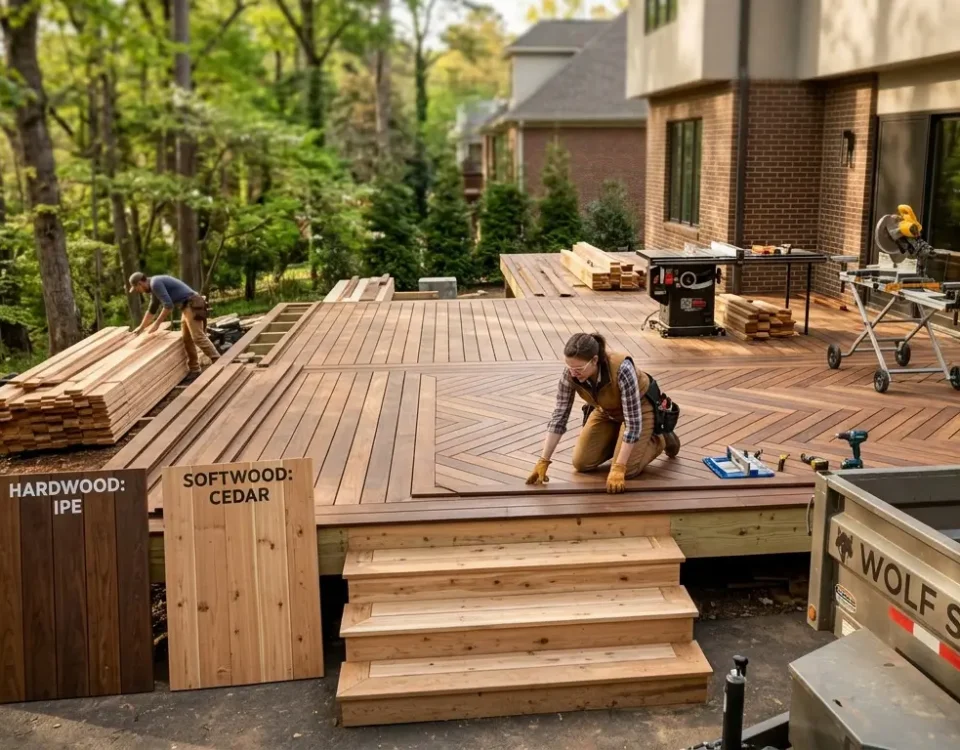
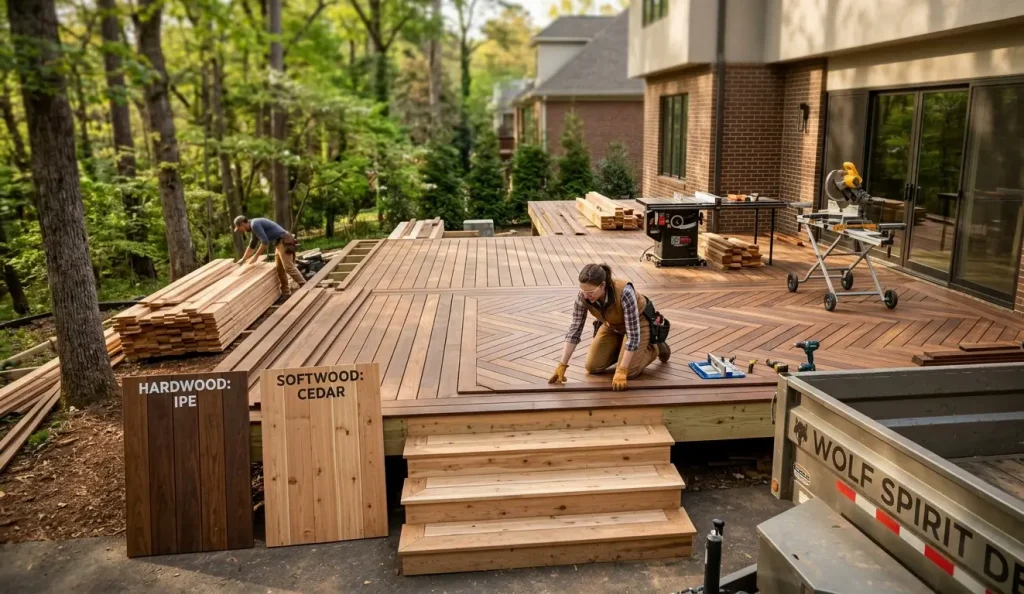
Think of Hardwoods (like Ipe or Mahogany) as the “heavy-duty” option. These come from slow-growing trees, making the wood incredibly dense. They’re basically the ironman of decking—tough, heavy, and naturally resistant to almost everything.
Softwoods (like Cedar or Pressure-Treated Pine) are the “approachable” classics. They’re lighter, easier to work with, and much kinder to your wallet upfront. But, like a high-maintenance friend, they need a little more “TLC” to stay in good shape.
How They Handle the Naperville “Swings”
1. The Expansion Game
Our temperatures swing from -10°F to 95°F. That makes wood “breathe” (expand and contract).
- Hardwood: Because it’s so dense, it barely budges. Less warping, fewer popped nails.
- Softwood: It’s more porous, so it moves more. If you don’t stay on top of sealing it, you might notice some twisting or “checking” (small cracks) after a brutal winter.
2. The Moisture Battle
Snow sits on Naperville decks for weeks.
- Hardwood: Naturally oily and dense, it shrugs off water like a raincoat.
- Softwood: Cedar is naturally rot-resistant, but it’s still a “sponge” compared to Ipe. You’ll need a solid staining routine to keep the moisture from moving in and staying there.
3. Maintenance (The “Saturday Morning” Factor)
How do you want to spend your weekends?
- Hardwood: You can actually let it “go grey” naturally, and it’ll still be structurally sound for decades. Or, oil it once a year to keep that rich, deep color.
- Softwood: Plan on a deep clean and a fresh coat of sealer/stain every 1–2 years. If you skip this, the Illinois sun and ice will turn it brittle pretty quickly.
The most popular hardwood and softwood options for Naperville
| Decking Wood | Type | Approx. Cost | Durability / Lifespan | Maintenance Needs | Moisture & Weather Resistance | Best For |
|---|---|---|---|---|---|---|
| Ipe (Brazilian Walnut) | Hardwood | High | 30+ years | Low (periodic oiling) | Excellent — very dense, naturally rot/insect resistant | Long‑lasting, low‑maintenance |
| Cumaru (Brazilian Teak) | Hardwood | High | 25–40 years | Low–Medium | Excellent — strong against moisture & wear | Durable hardwood alternative |
| Tigerwood (Goncalo Alves) | Hardwood | High | 25–30 years | Low–Medium | Very good — resists rot & decay | Rich color, dense, durable |
| Mahogany (e.g., African Mahogany) | Hardwood | High | 20–30 years | Medium | Good — benefits from sealing | Classic hardwood look |
| Western Red Cedar | Softwood | Medium | 15–20 years | Medium–High (seal/stain) | Moderate — naturally resist decay but softer | Rustic look, easier to work with |
| Pressure‑Treated Pine | Softwood | Low–Medium | 10–15+ years | High (regular sealing/staining) | Moderate — depends on treatment quality | Budget‑friendly option |
| Redwood (if available) | Softwood | Medium | 15–20+ years | Medium–High | Good — naturally decay‑resistant | Premium softwood choice |
The Bottom Line
There’s no “wrong” choice, only the right choice for your lifestyle and how you want to spend your weekends. If you have the budget to invest upfront, Hardwood is a tank that will likely outlast your mortgage. If you want a beautiful, budget-friendly space and don’t mind a little DIY maintenance, Softwood is a fantastic way to go.
Navigating the Naperville “weather gauntlet” is a lot easier when you have an expert in your corner. If you’re ready to stop dreaming and start building—or if you just need an honest opinion on which wood fits your backyard best—we’ve got your back.
At Wolf Spirit Deck, we specialize in building decks that don’t just look great on day one, but stay solid through every Illinois blizzard and heatwave.