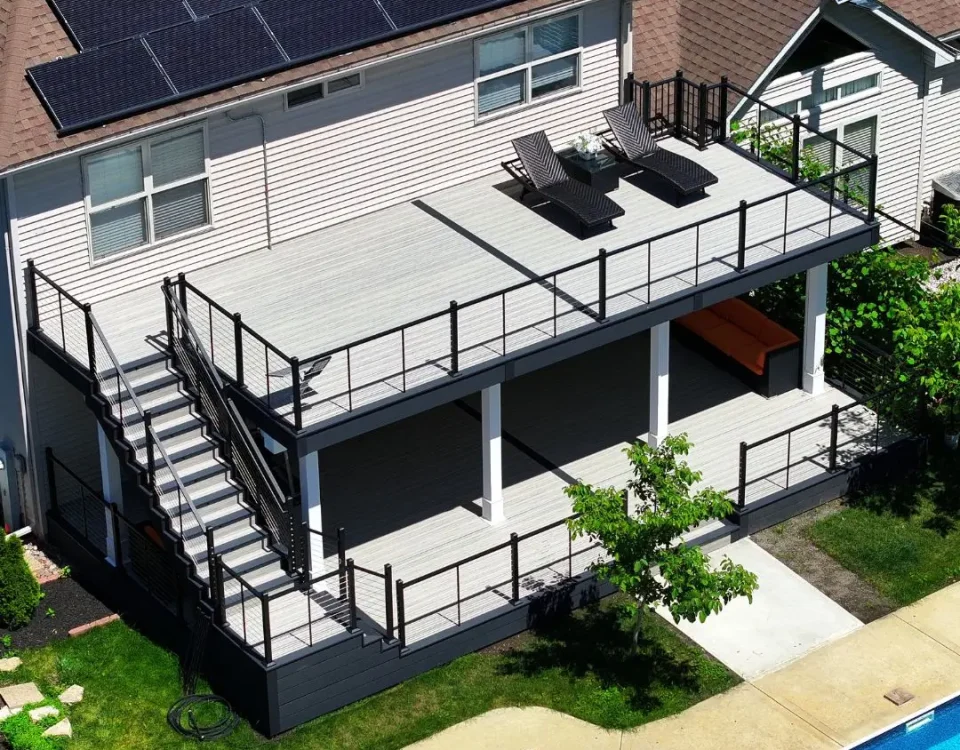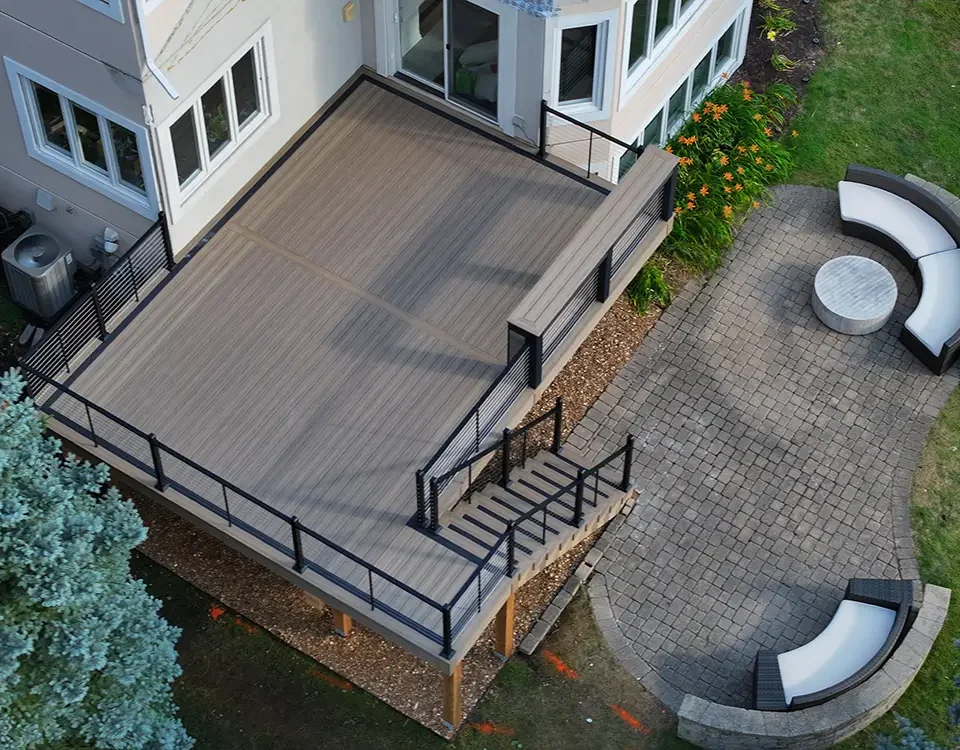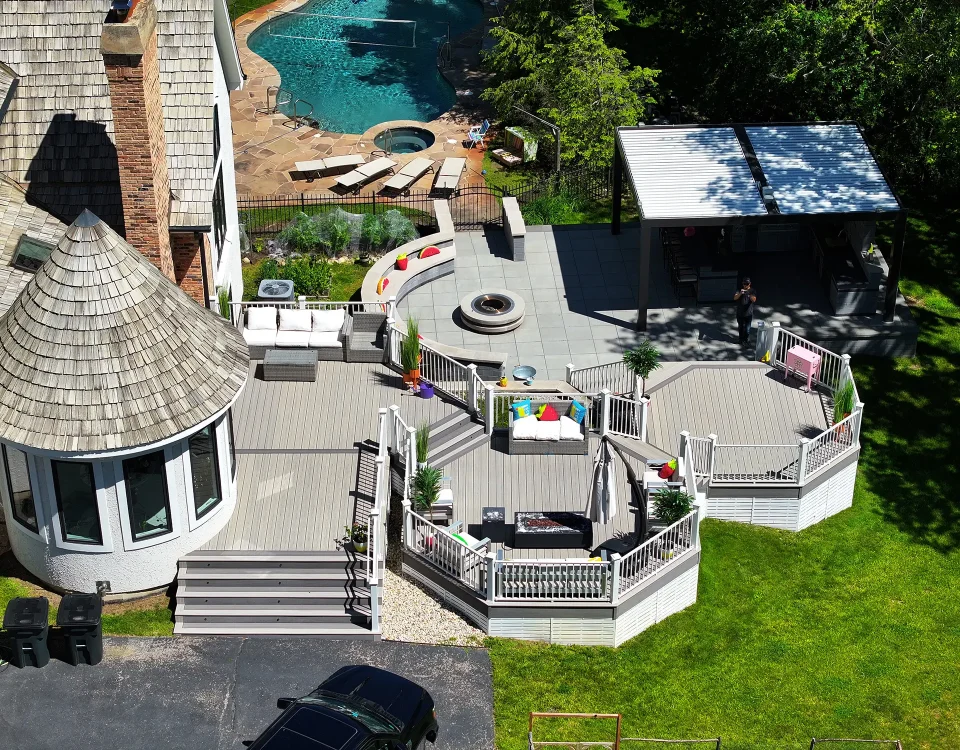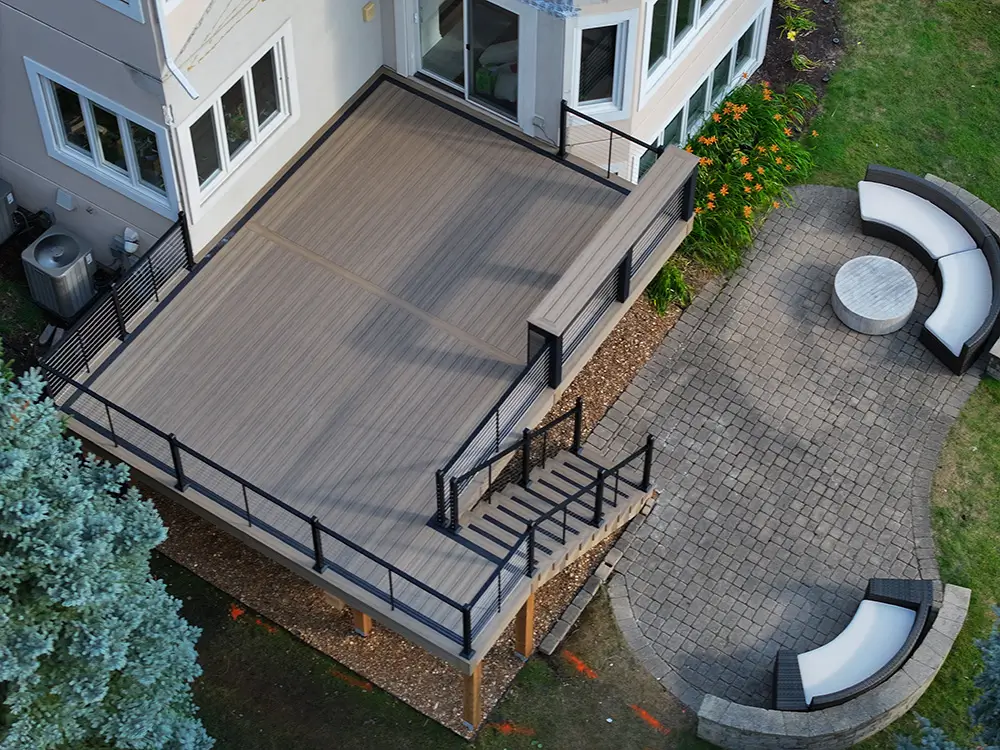
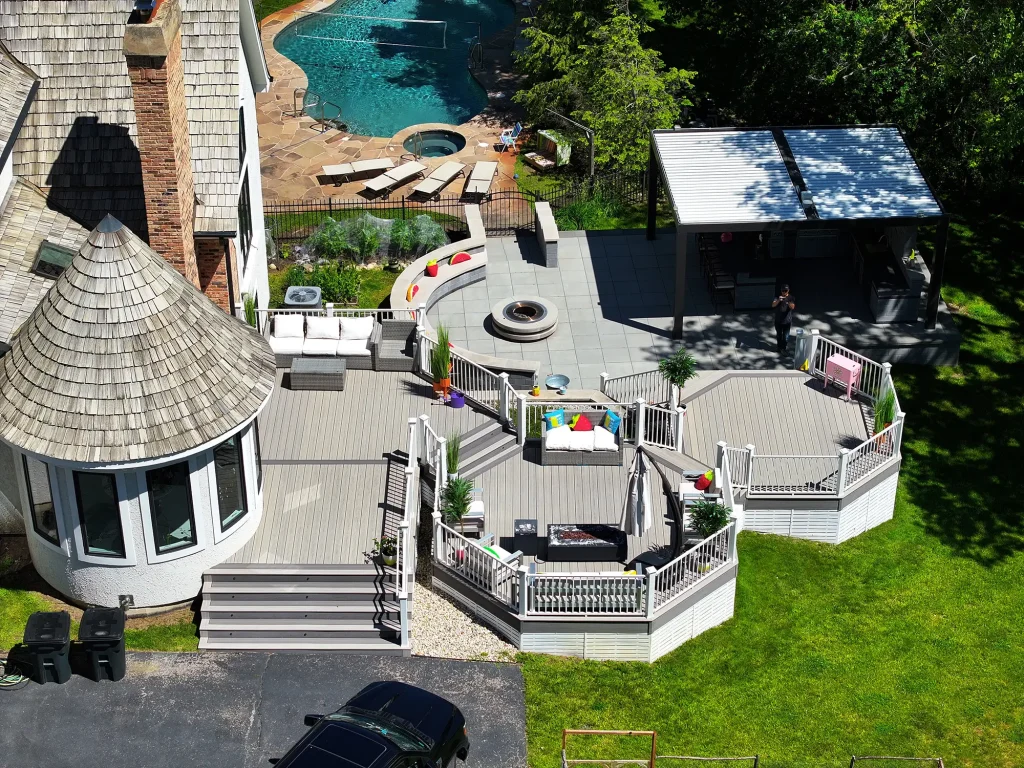
Introduction
In the western suburbs of Naperville, decks endure extreme seasonal swings. Sub-zero winter temperatures, heavy snow loads, spring rains, humid summers, and intense UV exposure create one of the most punishing climates for exterior structures.
Nearly 40% of homeowners replace their decks earlier than expected because the materials selected at installation cannot withstand long-term environmental stress.
At Wolf Spirit Deck, we specialize exclusively in premium composite decking from Trex, TimberTech, and Deckorators. After designing and building composite decks throughout Naperville and surrounding DuPage and Will counties, we’ve seen one consistent truth:
Deck material quality determines four critical outcomes:
- How long your deck lasts
- How well it maintains its appearance
- How safe it remains over time
- The total cost you will invest over 20+ years
By the end of this article, you’ll understand why choosing the right material protects both your property value and your family.
The Lifespan Equation: How Quality Determines Longevity
The Science of Material Degradation
Material failure begins at the molecular level.
Moisture Intrusion
Wood is porous. Water penetrates fibers, expands during freeze cycles, and contracts during thawing. Naperville averages 30–40 freeze-thaw cycles annually. Each cycle creates internal stress that causes:
- Cracking
- Warping
- Fiber separation
- Structural weakening
Low-grade composite products without full capping allow similar moisture infiltration.
UV Degradation
Ultraviolet radiation breaks down lignin in wood and polymer chains in low-quality composites. Surface fading is not merely cosmetic — it signals structural brittleness beneath.
Premium composite incorporates embedded UV stabilizers and advanced polymer caps to significantly slow degradation.
Biological Growth
Wood invites mold, mildew, and fungal decay — especially in shaded suburban lots with limited airflow. Over time, microbial growth accelerates structural deterioration.
High-quality capped composite blocks moisture absorption entirely, preventing biological infiltration.
Real Timeline: Composite vs Wood Performance
| Timeframe | Traditional Pressure-Treated Wood | Premium Composite |
|---|---|---|
| Year 1 | Fading begins | Looks new |
| Year 3 | Surface cracks, splinters | Minimal change |
| Year 5 | Rot pockets, loose boards | Structurally stable |
| Year 10 | Significant strength loss | 90%+ performance retained |
| Year 15 | Replacement likely | Strong and serviceable |
| Year 20+ | Already replaced once | Approaching end of design life |
In northern Illinois, untreated or poorly maintained wood frequently requires full replacement between years 12–17. Premium composite commonly exceeds 25 years.
Why Wolf Spirit Deck Specializes in Composite Materials
We build decks we would install on our own homes.
Wolf Spirit Deck works exclusively with:
- Trex
- TimberTech
- Deckorators
These manufacturers consistently deliver:
- 25+ year material warranties
- Advanced capped protection
- Proven Midwest climate performance
- Long-term structural stability
Why Composite Outperforms Wood in Illinois
- No rot or decay – Fully capped boards block moisture.
- Minimal maintenance – Annual wash versus yearly sanding, staining, sealing.
- Splinter-free surfaces – Safe for children and pets.
- UV-resistant color retention – No graying after one season.
- No toxic preservatives – Unlike pressure-treated lumber.
- Sustainable manufacturing – Trex utilizes up to 95% recycled content.
Our clients choose composite not for trend, but for lifecycle performance.
Appearance Retention: Why Quality Materials Stay Beautiful
Traditional wood begins graying within 6–12 months. Restoring appearance requires:
- Power washing
- Sanding
- Staining
- Sealing
Homeowners often spend 30–40 hours annually maintaining a 12×12 wood deck.
Over 20 years, that equals roughly 800 hours of labor.
Premium composite requires:
- Occasional washing
- No sanding
- No staining
- No sealing
Over two decades, total maintenance time may be under 40 hours.
That represents hundreds of hours saved — and thousands of dollars in avoided material costs.
Impact on Home Value
A deteriorated deck reduces curb appeal. Buyers perceive aging decks as deferred maintenance liabilities. In competitive Naperville real estate markets, exterior condition significantly influences offers.
A composite deck that maintains color, structure, and finish protects perceived home value.
Safety Is Non-Negotiable
Material failure is not just cosmetic — it becomes structural.
Structural Risk with Wood
Within 10 years, wood can lose 30–50% of its load capacity due to internal rot. This degradation often begins beneath the surface where it is invisible.
Failure risks include:
- Joist weakening
- Ledger board detachment
- Railing instability
- Fastener pullout
These risks intensify during gatherings when concentrated loads exceed compromised capacity.
Surface Hazards
Weathered wood develops:
- Splinters
- Cracks
- Slippery algae growth
- Sharp edges
Composite maintains consistent traction and smooth surfaces throughout its service life.
At Wolf Spirit Deck, safety margins are built into every design — but material integrity is foundational.
The True Cost of Ownership: 20-Year Analysis
| Expense Category | Wood Deck | Composite Deck |
|---|---|---|
| Initial Install | $8,000 | $14,000 |
| Maintenance Materials | $10,000 | $2,000 |
| Maintenance Labor Value | $8,000 | $400 |
| Major Repairs | $5,000 | $0 |
| Replacement | $9,000 | Not Required |
| Total 20-Year Cost | $40,000 | $16,400–18,400 |
Composite often breaks even by year 7–9.
After that point, savings compound.
Wood appears cheaper initially. Over time, it becomes significantly more expensive.
What Defines Quality in Composite Decking
Not all composite is equal.
Premium materials share these characteristics:
Full 360° Capping
Complete encapsulation prevents moisture intrusion from all sides.
High Material Density
Heavier boards resist thermal movement and warping.
Embedded UV Stabilizers
Protection exists throughout the board, not just the surface.
Long-Term Warranties
25+ year warranties signal manufacturer confidence backed by engineering data.
Tested Midwest Performance
Proven durability under freeze-thaw stress.
Lower-tier composite lacking these features often performs closer to wood than premium composite.
Deck Durability Verdict: Composite Over Wood Every Time
Material quality directly governs lifespan, safety, appearance, and long-term cost.
In Naperville’s climate, premium composite from Trex, TimberTech, and Deckorators consistently outperforms traditional wood across every measurable category.
At Wolf Spirit Deck, we design and build composite decks engineered for decades of performance — not short-term savings.
If you’re ready to invest in materials that will stand up to Illinois winters, humid summers, and daily use without constant upkeep, schedule your complimentary in-home consultation with Wolf Spirit Deck today.
Sources
- International Residential Code (IRC) R507 – Deck structural load requirements
- American Wood Council DCA 6 – Prescriptive Residential Wood Deck Construction Guide
- NADRA Deck Inspection Checklist – Structural deterioration standards
- USDA Forest Products Laboratory – Wood durability and moisture degradation studies
Frequently Asked Questions
How long should a quality composite deck last in Naperville, IL?
Premium composite commonly exceeds 25 years with minimal maintenance, even under freeze-thaw stress.
Is composite worth the higher upfront cost?
Yes. Break-even typically occurs between years 7–9, after which composite generates net savings.
Why does Wolf Spirit Deck not build wood decks?
Because lifecycle cost, safety profile, and durability data consistently favor premium composite in Illinois’ climate.
What makes Trex, TimberTech, and Deckorators superior to budget composite?
Full encapsulation, higher density cores, embedded UV stabilizers, and long-term warranties backed by decades of field testing.