By Radu Oprea, Owner, Wolf Spirit Deck · Illinois Contractor License #TGC119852 · Naperville, IL · Last updated: June 2026
The railing is the part of the deck people touch every day and the part most homeowners think about last. By the time someone calls us, they have usually settled on the boards and the layout, and railing is an afterthought we sort out at the design table. That order is backwards. Railing is often the second biggest line item on the quote after the decking itself, and the choice changes how the finished deck looks more than almost anything else. So here is the honest comparison I give people when they sit down with me: aluminum, composite, and cable, what each one costs installed in the Naperville area, and what the code actually requires before you fall in love with a look.
What the code requires before you pick a style
Every railing on this page has to clear the same bar, so it helps to know the bar first. Illinois builds to the International Residential Code, and the guard rules live in IRC Section R312. If your deck surface sits more than 30 inches above the ground at any point, you need a guard. That guard has to stand at least 36 inches tall, measured from the deck surface to the top of the rail. And the openings have to be tight enough that a 4-inch sphere will not pass through anywhere in the system.
That 4-inch rule is the one that quietly rules out some designs people show me on their phone. Wide-spaced horizontal slats look great in a magazine and fail inspection in a Naperville backyard. It is also the rule that makes cable railing more work than it looks, which I will get to. The City of Naperville inspects framing and final, and the inspector carries the ball. I have watched a railing get rejected over a gap at the bottom rail that the homeowner never would have noticed. So whatever look you want, it lives inside those three numbers: 30 inches to trigger, 36 inches tall, 4-inch gap.
Aluminum railing: the workhorse
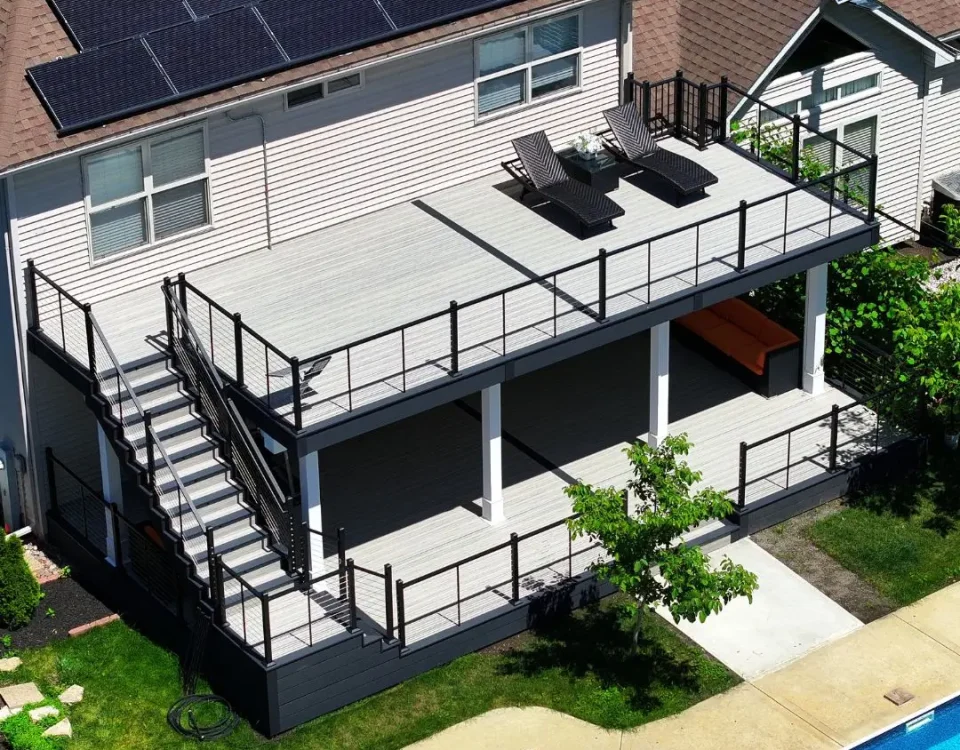
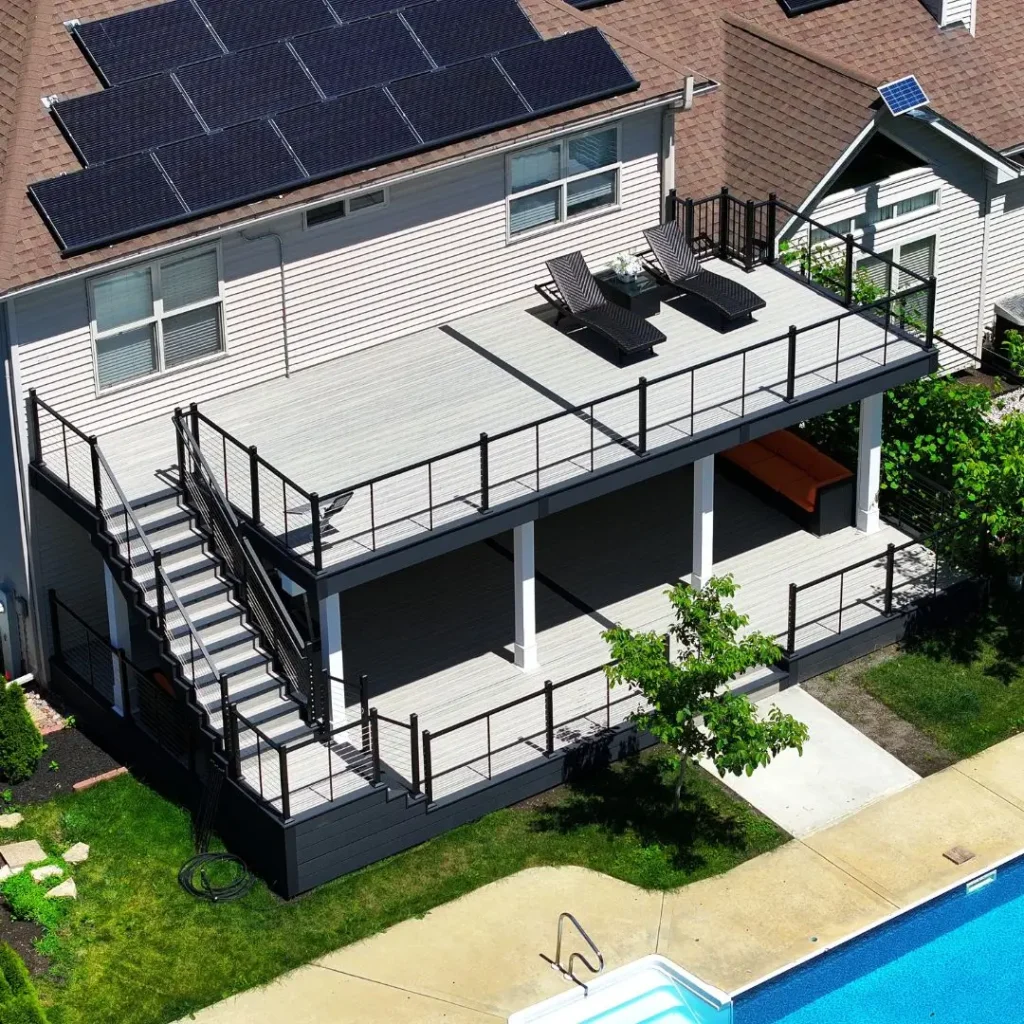
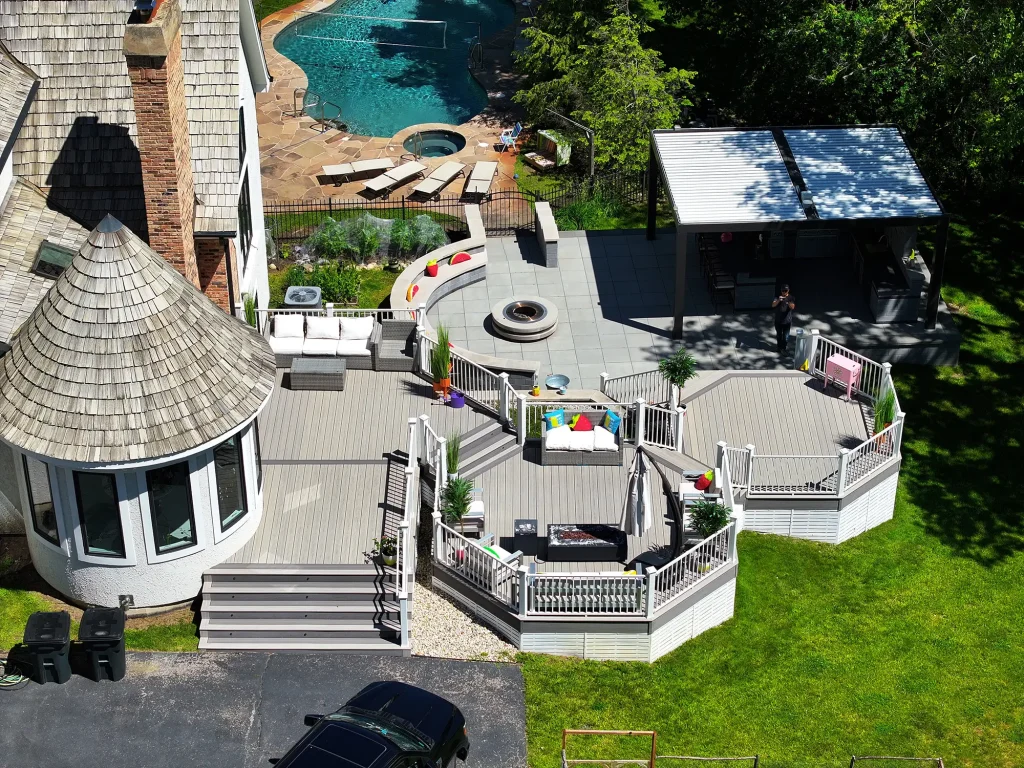
Aluminum is what we install most often, and it is what I steer most people toward when they are not sure. Powder-coated aluminum balusters with an aluminum top and bottom rail give you a clean, thin sightline, the coating holds up through our freeze-thaw winters without rust, and it costs less than the other two. Black is the color almost everyone picks now, and it reads well against both composite and wood decking.
In the Naperville area we install aluminum railing for roughly $60 to $95 per linear foot, depending on whether it is a straight run or stepped down a stair, and whether you want a matching aluminum top rail or a composite cap on top. A typical backyard deck needs somewhere between 40 and 80 feet of railing, so this is real money, but it is the gentlest of the three on the budget. The one honest downside: aluminum balusters are vertical pickets, so they read as a fence. If you are building toward a view, they will chop it up a little. For most yards that is fine. For a deck that looks out over water or a golf course, it is the thing people regret.
Composite railing: matches the deck, eats the view
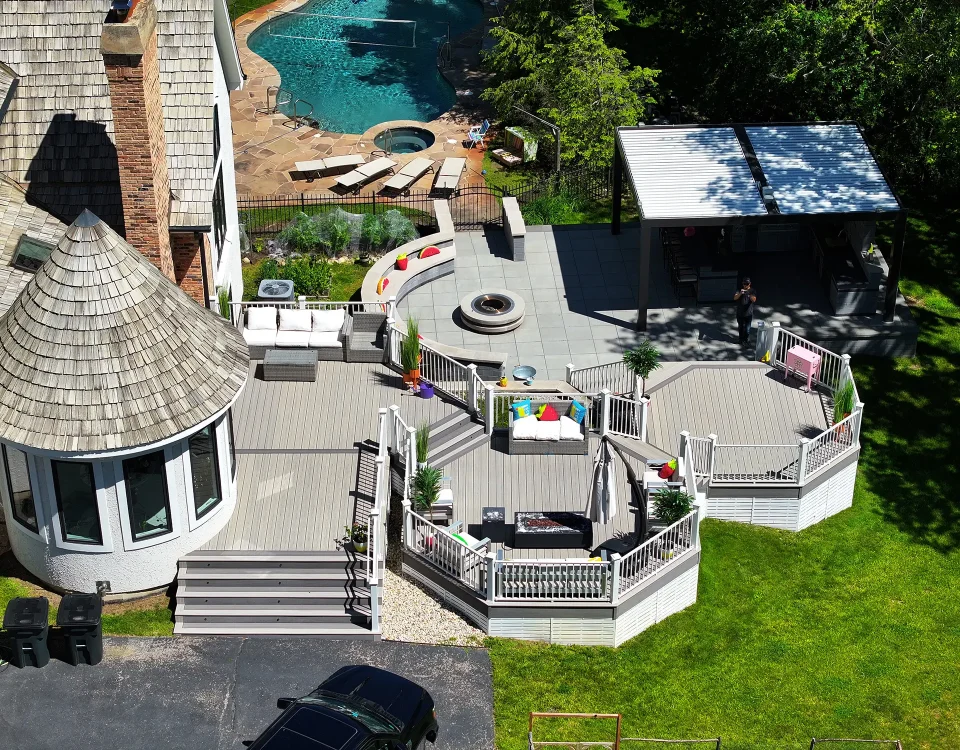
Composite railing is the bulky one. The posts, rails, and balusters are all the same wood-plastic material as premium decking, so it matches a composite deck perfectly and carries the same low-maintenance promise. No painting, no rust, hose it down and move on. TimberTech and Trex both make full railing systems that pair with their boards, and the color match is genuinely seamless.
Here is the tradeoff I make sure people understand. Composite balusters and rails are thick. The posts are big. A composite railing system has presence, and on a smaller deck it can feel like you fenced yourself in. It is also the most expensive of the three in most configurations, running about $80 to $130 per linear foot installed around Naperville once you are into the premium lines. People choose it anyway, and for a good reason: when the whole deck reads as one continuous material, it looks finished in a way a mixed system does not. If you went premium on the boards and you want the railing to disappear into them, composite is the move. If you want to keep the view open or keep the cost down, it is not.
Cable railing: the view-keeper, with a catch
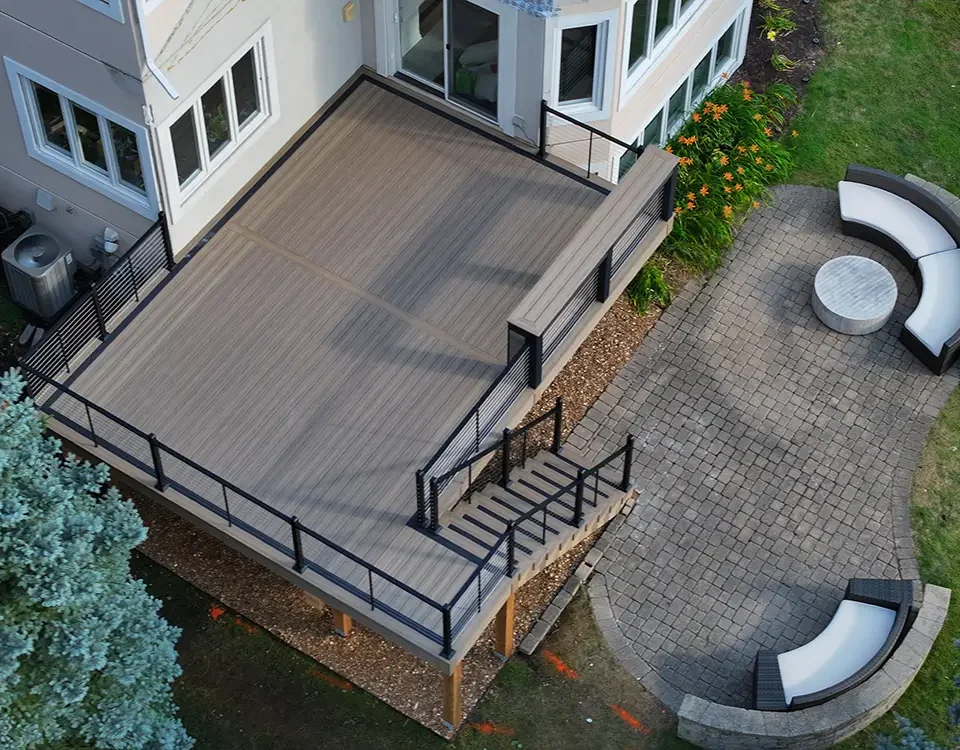
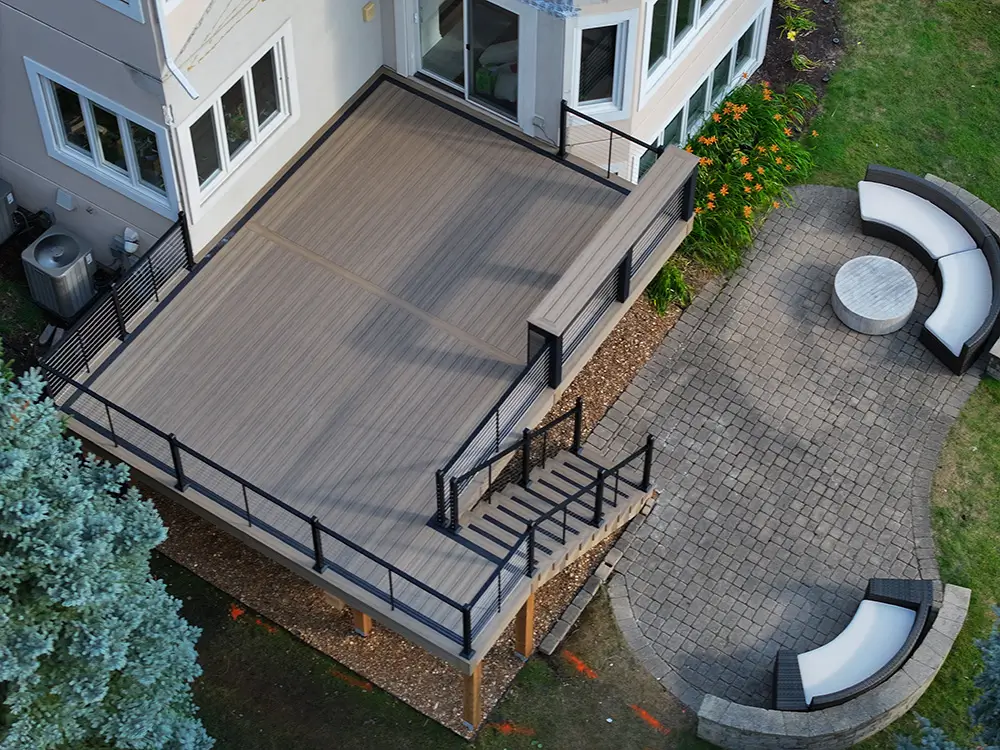
Cable railing is what people want when they have something to look at. Thin stainless cables run horizontally between posts, and from a few feet back they nearly vanish, so the eye goes straight to the yard instead of the rail. On the elevated deck we built on steel helical piles in Naperville, cable was the right call because the whole point of sitting up that high was the sightline.
The catch is twofold. First, cost. Cable railing runs about $120 to $200 per linear foot installed in this area, the priciest of the three, because the hardware is stainless and the labor is fussy. Each cable has to be tensioned correctly, and there are a lot of them. Second, that 4-inch sphere rule. Cables stretch and flex, so a gap that measures under 4 inches at install can open up past code if the cables are not tensioned tight and spaced close. We run them tighter than the minimum on purpose, usually around 3 inches apart, so they stay compliant for the life of the deck and not just for inspection day. Done right, cable is beautiful and lasts. Done cheap, it sags in two summers and a kid can push a soccer ball through it. This is not the railing to hire the lowest bidder for.
The three side by side
| Aluminum | Composite | Cable | |
|---|---|---|---|
| Installed cost (per linear ft, Naperville) | $60 to $95 | $80 to $130 | $120 to $200 |
| Sightline | Thin, but vertical pickets break up a view | Bulky; matches deck, blocks view most | Nearly invisible; best for a view |
| Maintenance | Wash occasionally; coating resists rust | Wash occasionally; no rust | Wash cables; check tension every few years |
| Winter performance | Holds up well through freeze-thaw | Holds up well; no rust or rot | Stainless resists rust; tension can shift in cold |
| Best when | You want clean and budget-friendly | You want the railing to match the boards | You have a view worth protecting |
What actually moves the price
Linear footage is the obvious driver, but a few things surprise people. Stairs cost more per foot than a straight run because angled cable and stepped rail take more labor and more hardware. Corners add posts. And the material under the cap matters: a composite top rail on aluminum balusters splits the difference on cost and look, and a lot of our jobs land there. If you are also doing deck lighting, post-cap lights and under-rail strips get planned at the same time as the railing, because retrofitting them later means opening things back up.
One more thing worded plainly: railing is not where to save money on a deck. The boards you can change in twenty years. The railing is the safety system holding people on an elevated platform, and it is the first thing a buyer’s inspector grabs and shakes at resale. We build all three to code and a little past it, because the gap between passing inspection and being genuinely solid is small in dollars and large in how the deck feels under your hand. Whether your deck is wood, composite, or sitting on steel framing, the railing question is the same, and it is worth getting right.
If you are weighing railing options for a deck in Naperville or the western suburbs, the deck builders at Wolf Spirit Deck can walk your yard and give you a real per-job number. Call (312) 765-3998 or request a free quote.
Radu Oprea is the owner of Wolf Spirit Deck, a licensed, bonded, and insured deck builder in Naperville, IL. Illinois Contractor License #TGC119852, verifiable through the Illinois Department of Financial and Professional Regulation. Office: 2020 Calamos Ct, Suite 200, Naperville, IL 60563.