
By Radu Oprea, owner of Wolf Spirit Deck (Illinois Contractor License #TGC119852)
People are usually surprised when we steer them away from wood. We build decks for a living. A wood deck is cheaper to put up, which means a smaller invoice and an easier sale, so you’d think we’d push it. We don’t, at least not for most homes here. After enough years building across Hinsdale and the towns around it, I’ve watched too many beautiful new wood decks turn gray and splintery by their third or fourth winter. So when someone calls us as their deck builders in Hinsdale and asks for a wood deck, the first thing we do is ask what they actually want out of it. Most of the time, the honest answer points somewhere else.
Here’s the reasoning, including the cases where wood is still the right call.
The weather here is the whole argument
Hinsdale gets the full Chicago-area swing. Freezing winters, snow sitting on the boards for weeks, then humid summers that bake everything. Water gets into wood, freezes, expands, and works the boards loose a little more each year. That freeze-thaw cycle is what cracks, cups, and grays a wood deck, and it never stops happening.
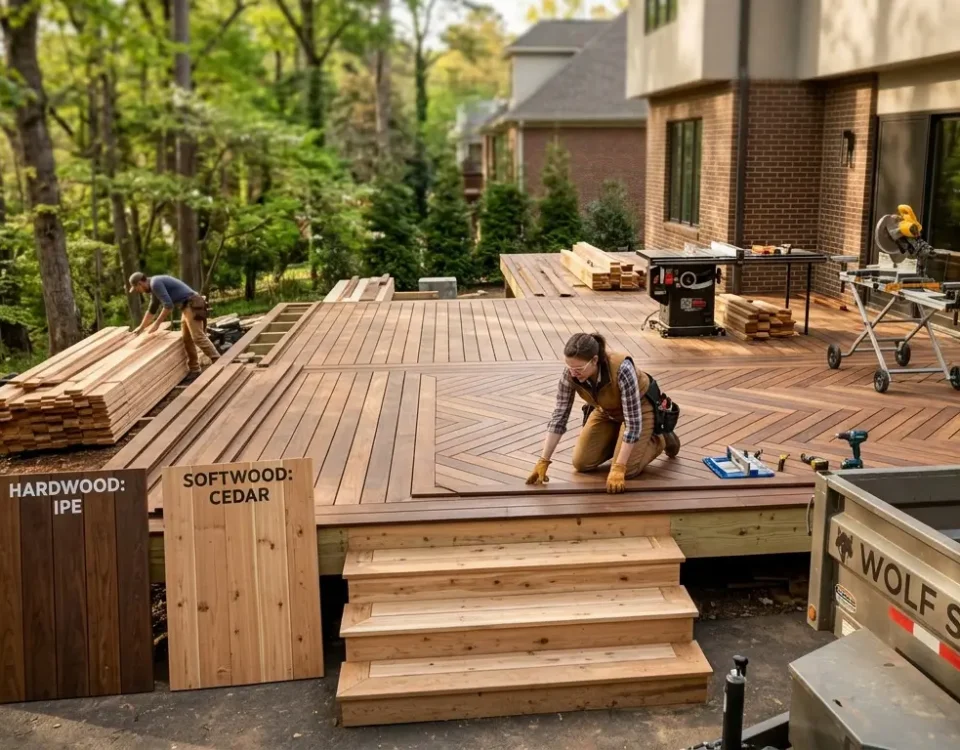
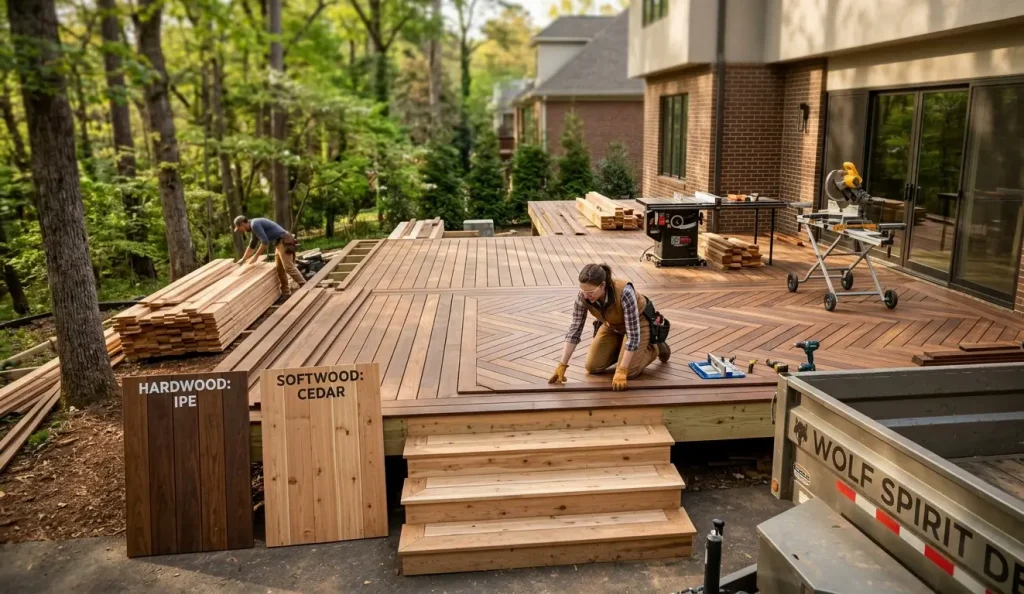
Cedar and pressure-treated pine both fight it for a while. Then they lose. I’ve pulled six-year-old wood decks where the surface looked fine from the kitchen window but the boards flexed underfoot and half the fasteners had backed out. The owners had no idea, because wood hides its decline until it doesn’t.
What a wood deck really costs after the build
The sticker price is only the start with wood. To keep it from going gray and rough, you’re sealing or staining it every year or two. That’s either a weekend of your time plus materials, or a few hundred dollars to have someone do it, every couple of years, for as long as you own the deck. Skip it for a few seasons and you don’t just lose the looks. You lose years off the deck’s life.
Add it up over ten or fifteen years and the “cheaper” wood deck often costs more than the composite one would have, and it looks worse the whole time. That math is the real reason we push back.
Composite isn’t magic, and I’ll say so
I’m not going to pretend composite is flawless, because it isn’t. It costs more up front, usually somewhere in the range of 30 to 50 percent more on materials than a comparable wood deck. A dark composite board in full afternoon sun gets hot under bare feet. And a cheap composite line from twenty years ago earned the material a bad reputation that the good brands have spent a long time undoing.
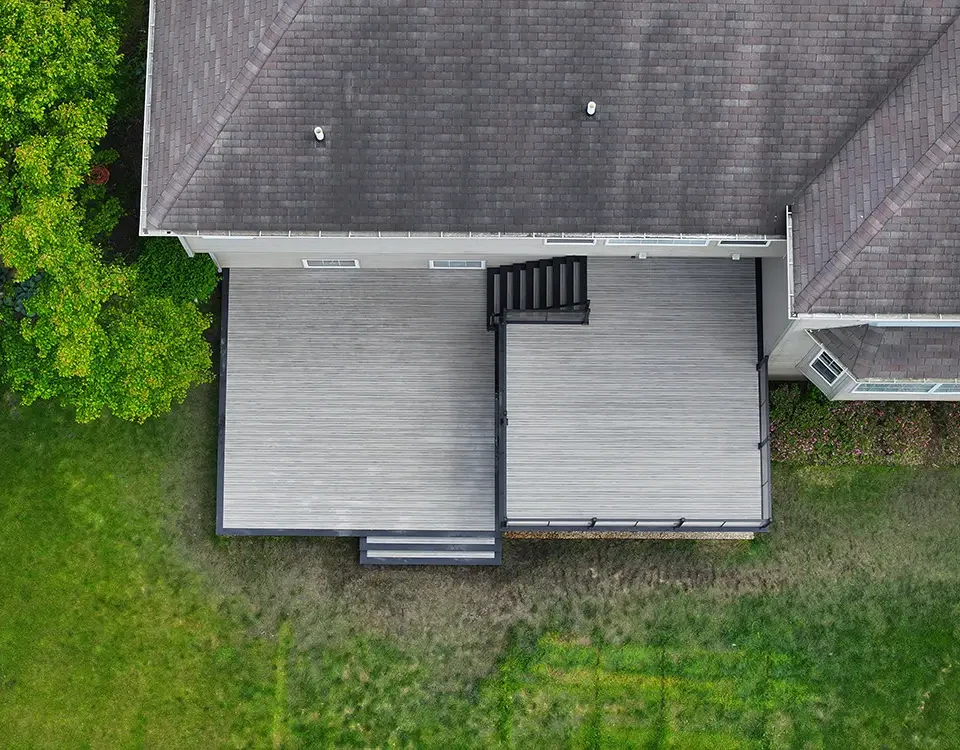
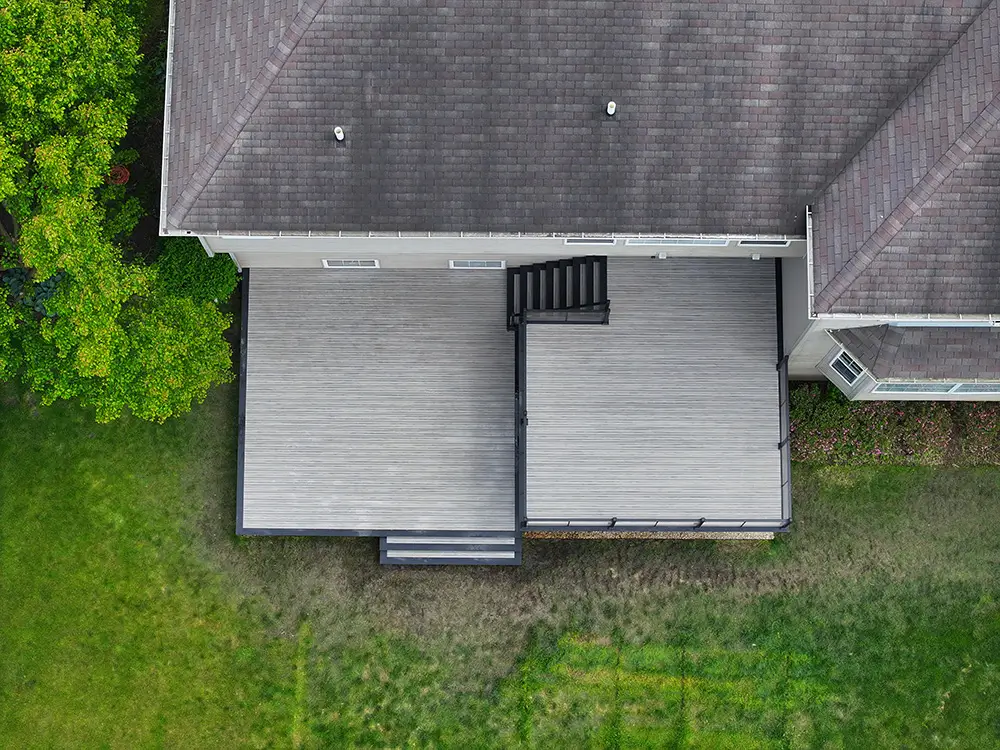
What composite gets you is the part that matters in this climate: no staining, no sealing, no annual ritual. You wash it a couple of times a year and that’s the maintenance. The TimberTech and Deckorators boards we install hold their color for decades and shrug off the freeze-thaw that destroys wood. For most Hinsdale homeowners, paying more once beats paying less every year forever. If you want to see how the brands actually held up over time on real jobs, we wrote up a five-year side-by-side of cedar, Trex, and TimberTech from decks we built in the same neighborhoods.
One thing people miss: your frame is wood either way
Here’s a detail that trips homeowners up. Even a composite deck usually sits on a pressure-treated wood frame. So the surface you walk on is rot-proof, but the structure underneath is still wood, and wood underground or under snow eventually gives. That’s why we offer steel deck framing for people who want the whole deck, top to bottom, to outlast them. Steel doesn’t rot, warp, or sag, and it keeps a big or elevated deck dead flat for the life of the boards. It costs more, and it isn’t right for every job, but it’s worth knowing the option exists before you decide.
The one time we tell you to build in wood
So when do we actually recommend a wood deck? More often than you’d guess, in a few specific situations.
If the budget genuinely won’t stretch to composite right now, a well-built pressure-treated or cedar deck is a real deck, not a consolation prize. We’d rather build you a solid wood deck you can afford than talk you into financing something you can’t.
If you love real wood, that’s a legitimate reason too. Some people want the smell of cedar, the warmth of natural grain, the way it weathers. Composite imitates wood well, but it isn’t wood, and a few homeowners care about that difference more than they care about the upkeep. If you’re one of them and you’ll actually keep up with the sealing, wood is a fine choice.
And if you’re matching something, wood can be the right answer. Plenty of Hinsdale’s older and historic homes have existing wood structures, porches, or railings, and a composite deck can look out of place bolted onto a 1920s house. Sometimes the deck that fits the home is the one made of the same material the home already wears.
The pattern across all of those: wood works when it’s a deliberate choice, made with eyes open about the maintenance. It goes wrong when someone picks it only because it was cheaper and then never touches it again.
Whatever you build, the permit comes first in Hinsdale
One more thing worth knowing before you fall in love with any material. Hinsdale is stricter than most suburbs about what you can build, and that’s doubly true in the Robbins Park Historic District or on a landmarked property, where the Historic Preservation Commission gets involved. You can read the village’s own rundown of what needs a permit on the Village of Hinsdale permits page. We handle the drawings, the application, and any historic review for you, but it’s smart to know the lay of the land going in.
We’ll tell you the truth for your lot
There’s no single right deck. There’s the right deck for your house, your budget, and how much weekend maintenance you’re willing to live with. Most of the time in Hinsdale that points to composite. Sometimes it points to wood, and we’ll say so plainly when it does. Come walk your backyard with us and we’ll give you the honest version, not the version that pads the invoice.