By Radu Oprea, Owner, Wolf Spirit Deck · Illinois Contractor License #TGC119852 · Naperville, IL · Last updated: June 2026
Almost every La Grange homeowner who asks us about a louvered pergola starts the same way: they sat on a finished deck in late July, the sun was brutal by 2 p.m., and the deck they spent good money on was sitting empty half the day. A louvered pergola is usually the fix they’re circling. It’s also the single biggest “is this worth it” decision I get asked about, so here’s the honest version, costs and tradeoffs included.
What a louvered pergola actually is
A traditional wood pergola gives you partial shade through fixed slats and a nice frame for climbing plants. It looks great and it does almost nothing when it actually rains.
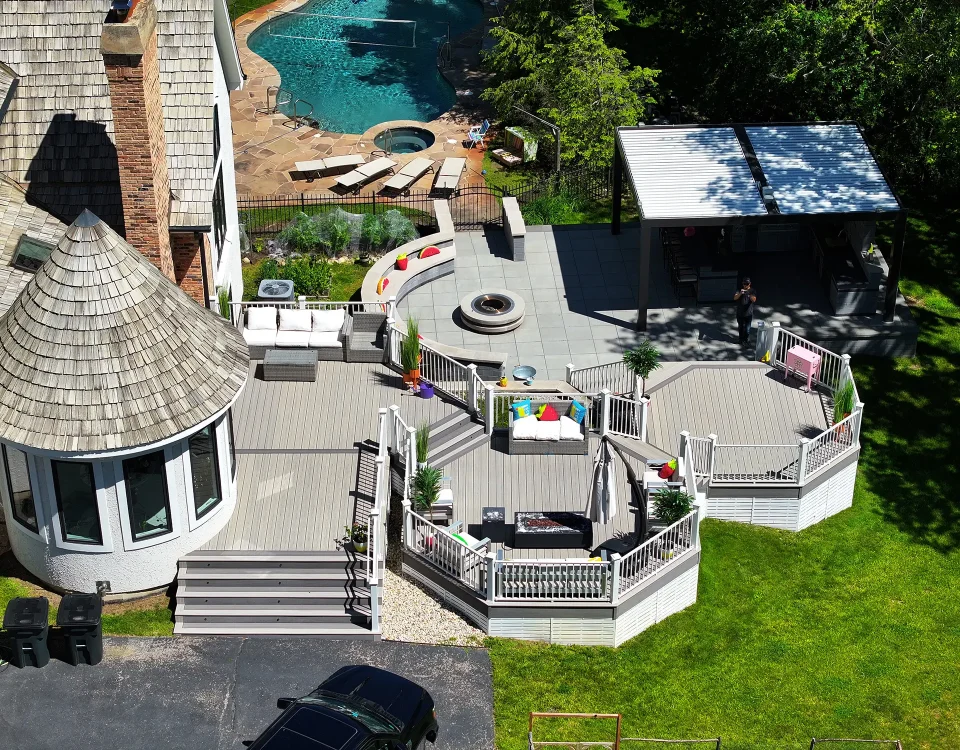
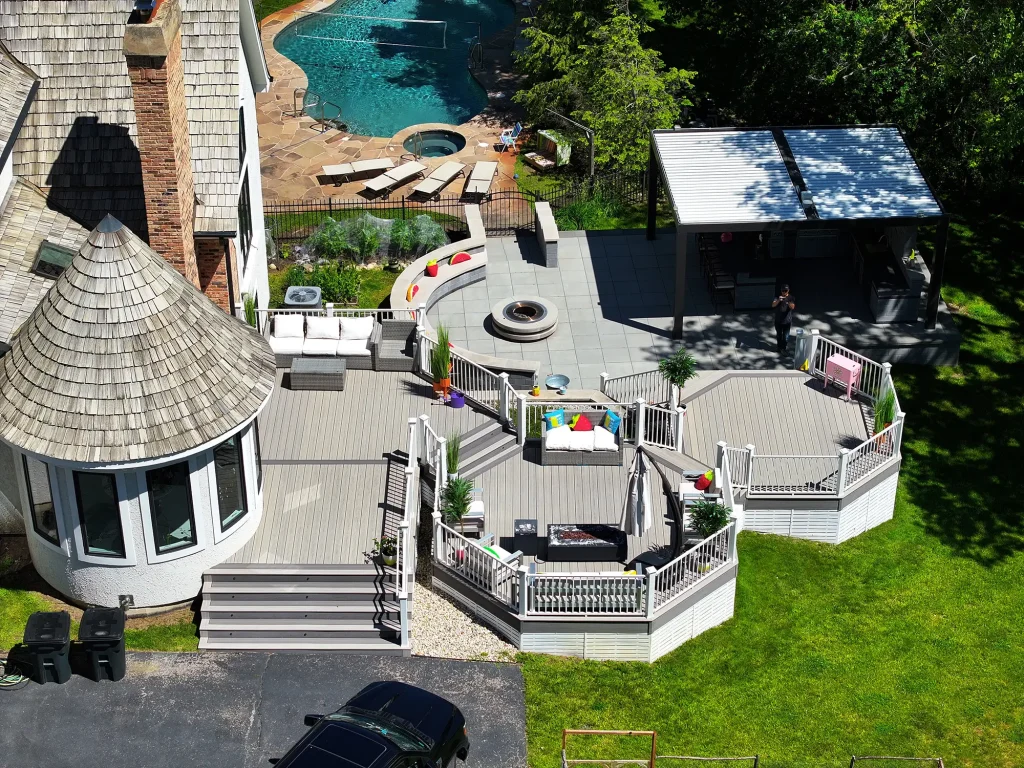
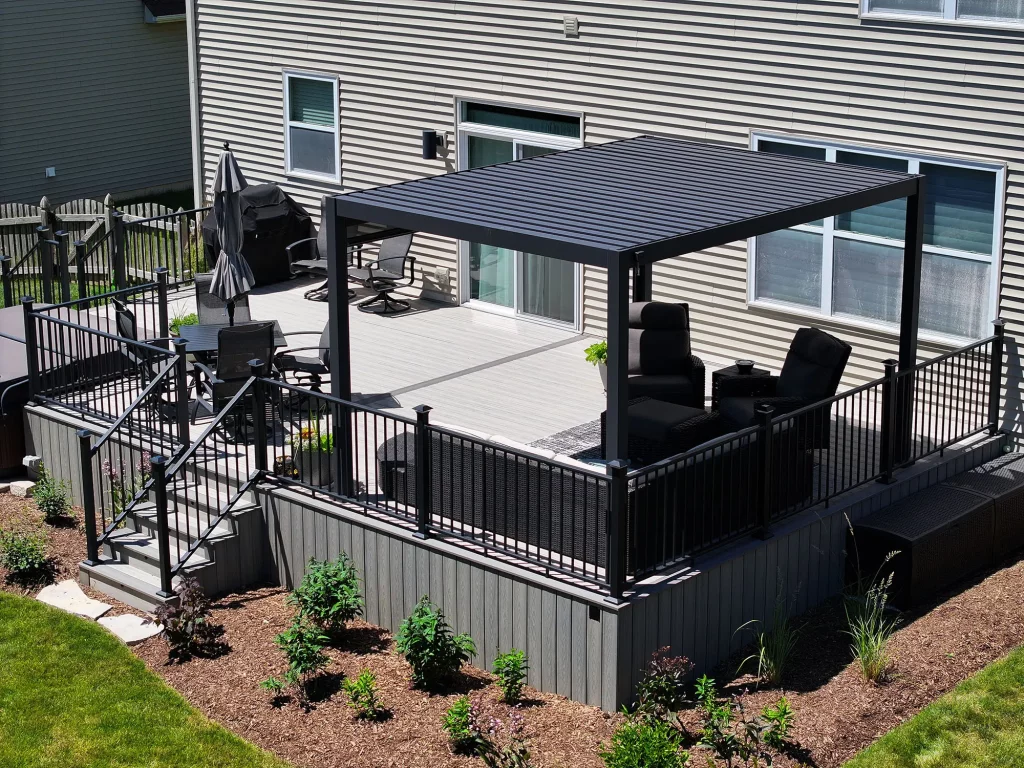
A motorized louvered pergola is a different animal. The roof is made of aluminum louvers that pivot on a motor, so you control how much sun comes through with a remote or an app. Open them flat for full sun, angle them for dappled shade, or close them tight and the roof becomes watertight, channeling rain into the posts and away from your deck. Most of the ones we install also take a rain sensor that closes the louvers on its own when a storm rolls in, plus optional screens and integrated lighting. You can see the systems we build on our louvered pergola page, but the short version is this: a wood pergola is a shade feature, and a louvered pergola turns part of your deck into a room you can use in more weather.
What it costs in La Grange
I’ll give you real ranges, with the usual caveat that your number depends on size, motorization, and what you add on.
A modest wood pergola over a section of deck can land in the low thousands. A motorized aluminum louvered pergola is a bigger commitment. For most La Grange decks we work on, an attached louvered structure covering a usable seating area runs from the mid teens into the thirties once you factor in the unit, the structural work to carry it, and electrical for the motor. Bigger spans, integrated screens, heaters, and lighting push it higher.
What drives the number, roughly in order: the size and span of the roof, whether it’s motorized or hand-cranked, the electrical work, and any extras like screens, lighting, or a heater. The reason two quotes for “a louvered pergola” can differ by ten thousand dollars is usually that one of them quietly left out the footings, the electrical, or the structural reinforcement your existing deck needs to carry the load. Make them itemize it. I wrote about why the cheapest deck bid often isn’t actually the cheapest in this breakdown of three real quotes, and the same trap shows up on pergola proposals.
What it changes about how you use the deck
This is the part homeowners underestimate. A louvered pergola doesn’t just add shade. It changes how many days a year the deck is usable.
In our climate, an open deck gets used hard in May and September and sits empty during the worst of July afternoons and any week it rains. Close the louvers and you’ve got a dry, shaded space that works through a light rain and knocks the temperature down noticeably underneath. People who add one tend to start eating dinner out there on weeknights, because the deck stopped being a fair-weather gamble. If you’re someone who built a deck and then found yourself not using it as much as you hoped, this is usually why, and it’s usually the fix.
There’s a resale angle too. A well-built covered outdoor space reads as a real living area to buyers in La Grange and nearby towns like Western Springs, not just a wooden platform. I won’t promise you a specific return, because anyone who quotes you an exact resale figure is guessing. But a functional covered deck shows better than an open one, and it shows a lot better than a tired old deck.
The permit and structural part nobody mentions in the showroom
Here’s where the cheap quotes get people. A louvered pergola is a real structure with real weight and a wind load, and in La Grange that means permits and engineering, not a weekend install.
A motorized unit also has electrical, and the village requires permits for that work. The Village of La Grange spells out what does and doesn’t need a permit on its permit requirements page, and an aluminum structure with a motor is squarely on the permit side. A contractor who tells you a louvered pergola doesn’t need a permit here is either inexperienced or planning to cut corners, and either way the inspector will eventually find it. I walked through how the local permit and inspection process actually plays out in our deck permit post, and a pergola adds an engineering and electrical layer on top of that.
Structurally, this is the question I wish more people asked before signing: can your existing deck even carry this thing? A louvered pergola is heavy, and the wind wants to lift it. Often the answer is that we need to add dedicated footings below the frost line, around 42 inches deep in our part of Cook County, and tie new posts into the deck framing rather than just bolting the pergola to boards that were never sized for it. If a builder skips that step to save money, the first real windstorm becomes your problem. The structure has to be planned with the deck, which is exactly why we’d rather design both together for homeowners in La Grange than bolt a pergola onto someone else’s deck and inherit its limits.
Wood pergola or louvered aluminum: how I’d decide
If your goal is a bit of shade and a place for string lights and a climbing vine, a wood pergola is cheaper and honestly looks warmer. It also grays out, needs sealing every couple of years, and gives you nothing when it rains.
If you want to actually use the deck more days of the year and you’re willing to spend for it, the louvered aluminum is the one that changes your habits. It costs more up front and asks almost nothing of you after. I’ve never had a client regret the louvered version once they lived with it through a summer, but I’ve also talked people out of it when their real need was a $4,000 wood frame, not a $25,000 system. Match the spend to how you’ll use the space.
So is it worth it?
For some homeowners, no. If your deck already gets used the way you want and you just want a little shade, save the money. For the people who keep telling me their deck sits empty in the heat, or who want to eat outside without checking the forecast, a louvered pergola is usually the thing that finally makes the deck earn its cost.
If you’re weighing one for a La Grange deck and want a straight read on whether your structure can carry it and what it’d actually run, that’s a conversation we’re happy to have. Reach us at the number below.
Wolf Spirit Deck Owner & CEO: Radu Oprea Illinois Contractor License #: TGC119852 Naperville Office: 2020 Calamos Ct, Suite 200, Naperville, IL 60563 Phone: (312) 765-3998