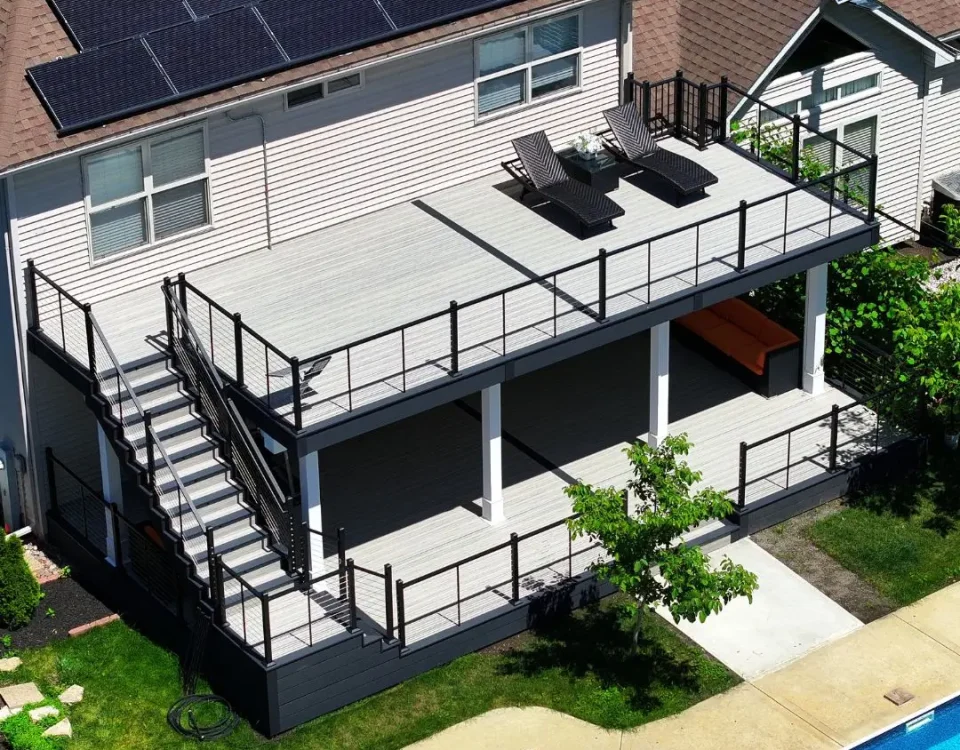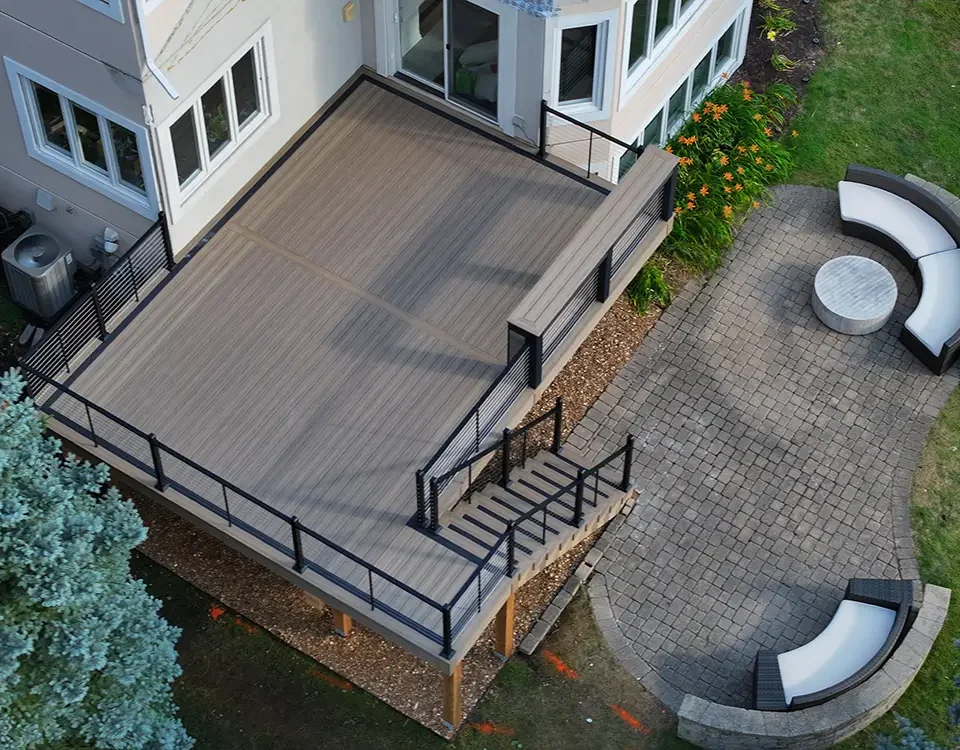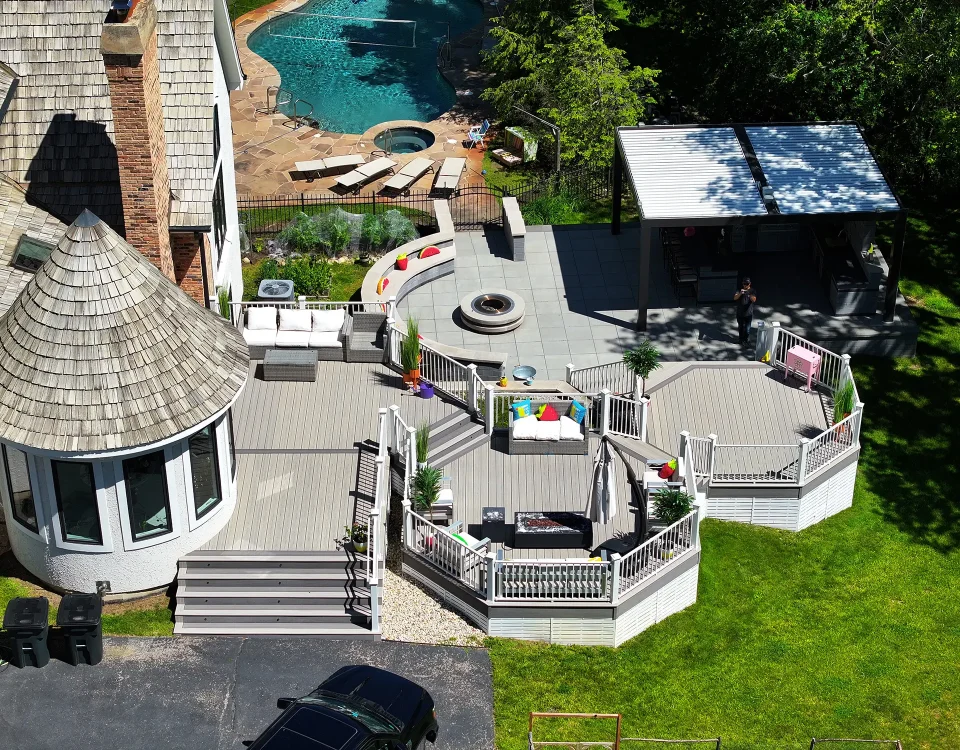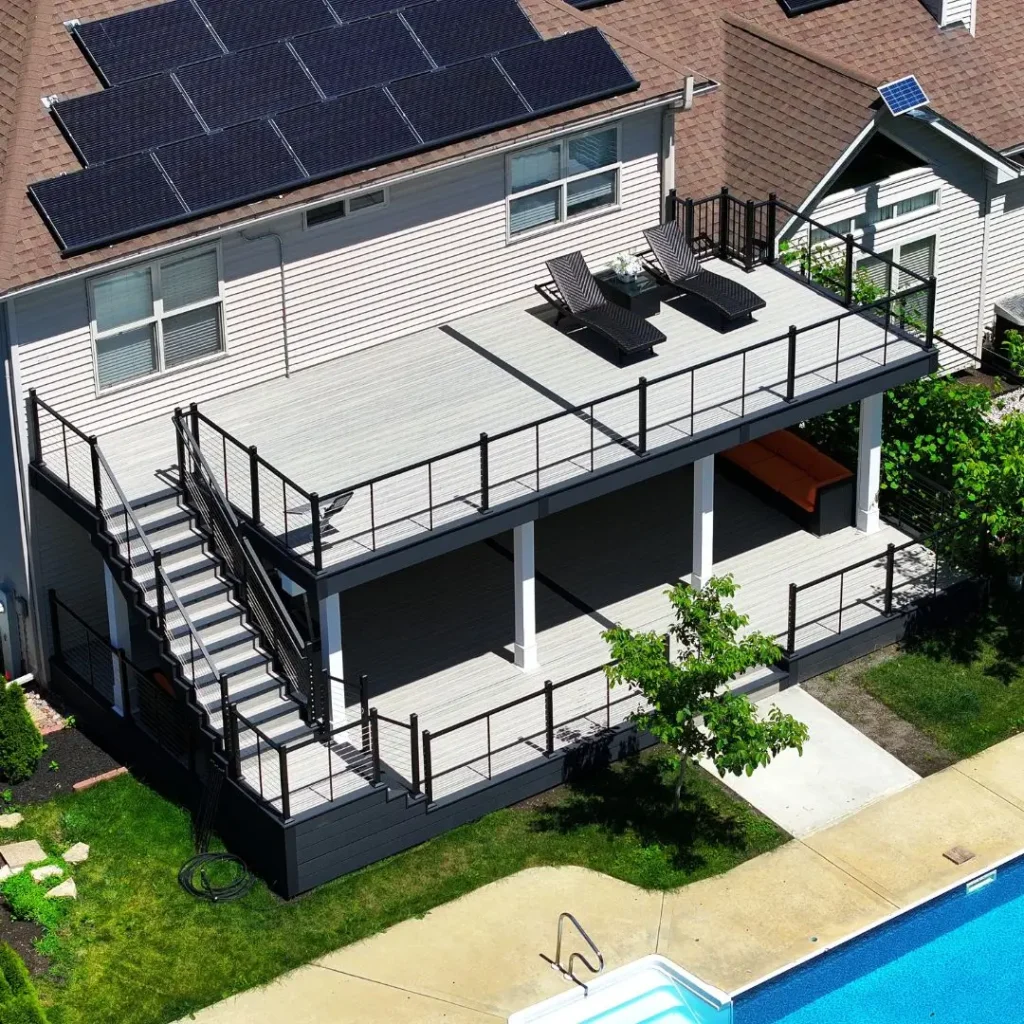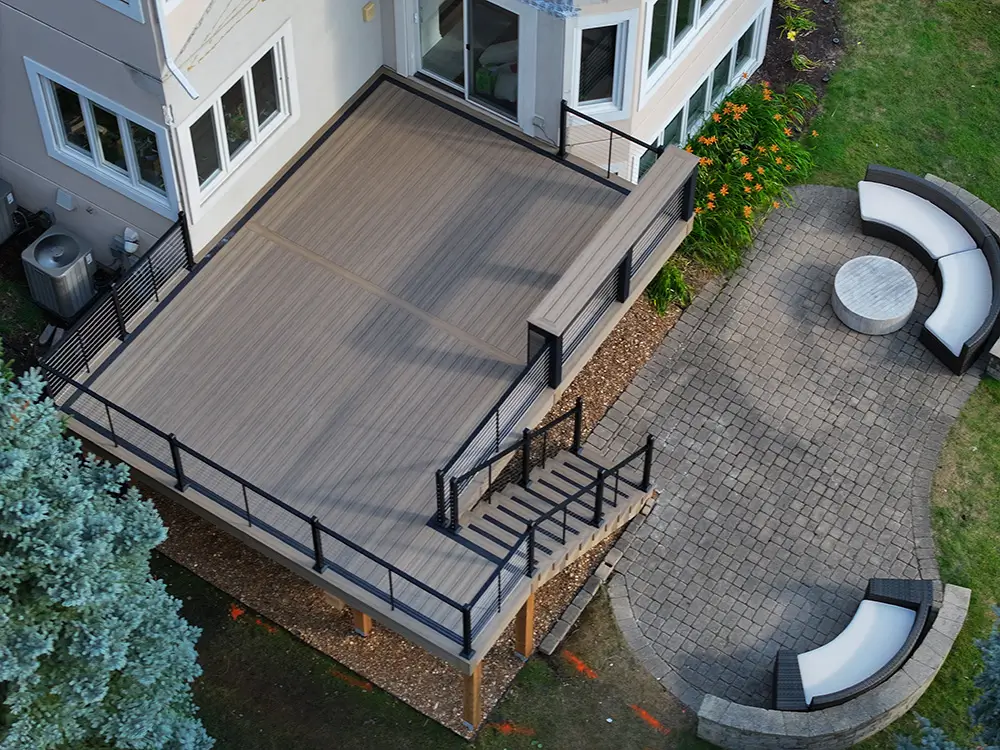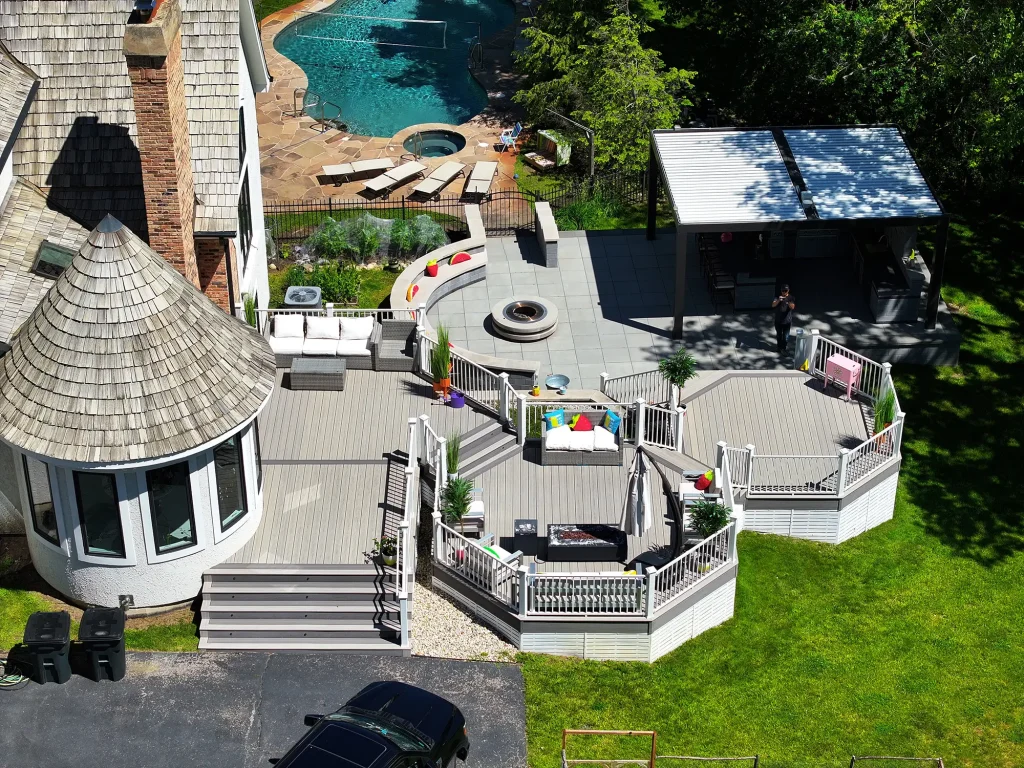
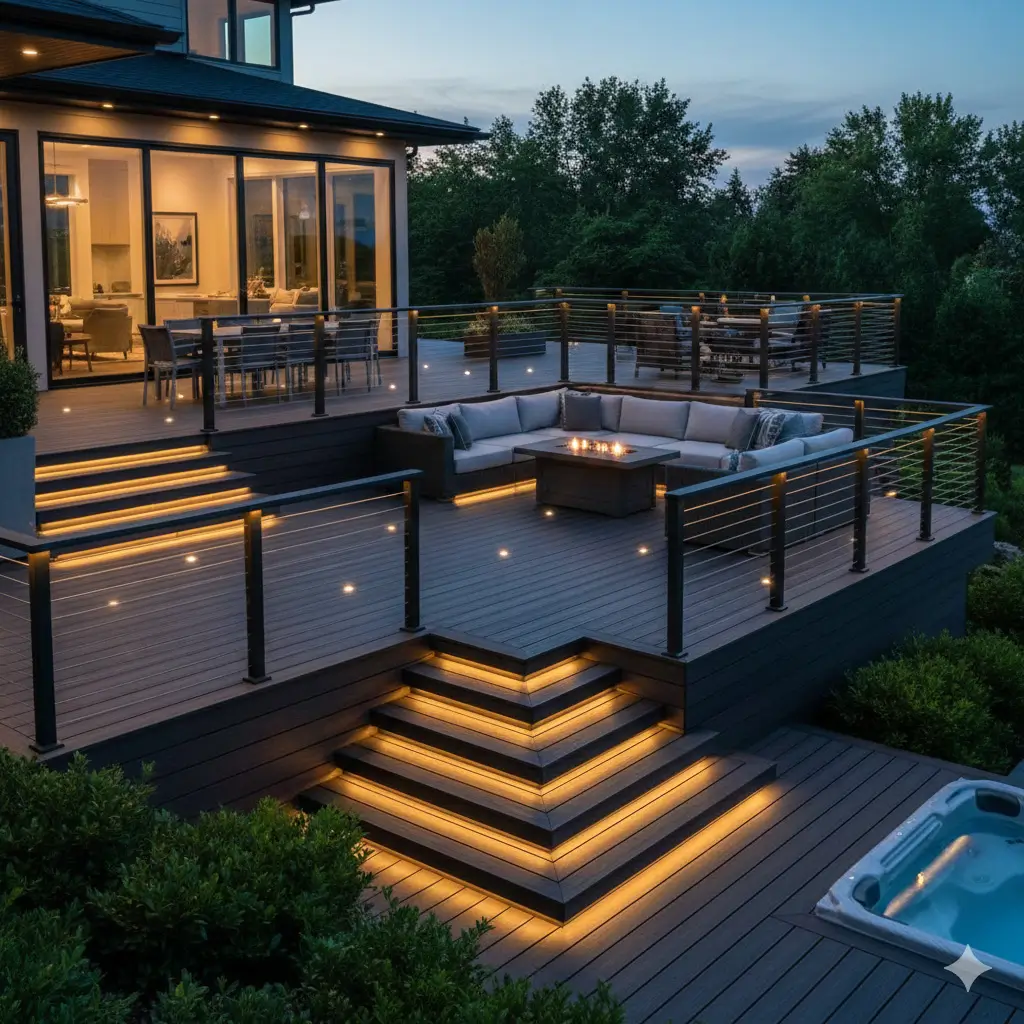
Building a new deck is an amazing feeling, especially when everything is done and ready to use. Whatever you enjoy doing on it, from dining, lounging to entertaining, you are going to end up spending time on during the day and during the evening when the sun is out. This is the time when your deck creates a new atmosphere with lights on it.
Some people like to keep their decks simple, others have more special tastes, but with a large deck size comes more design possibilities for it. For example you could integrate under-rail lighting and in-deck lighting. Thy look extremely beautiful on any deck, but more special on multi-level decks.
In this post we will share a few lighting ideas based on our decking experience in the Naperville, IL area so you have a better idea on what to install in your new deck.
Why Lighting Matters More on Multi-Level Decks
Unlike single-platform decks, multi-level decks introduce elevation changes, transitions, and edges. Poor lighting can make these features feel disjointed or even hazardous. Strategic lighting:
- Improves nighttime safety at steps and level changes
- Defines zones without physical barriers
- Enhances depth and dimension of the structure
- Extends usable hours well past sunset
- Adds long-term property value
Under-rail and in-deck lighting are especially effective because they provide illumination without visual clutter.
Under-Rail Lighting: Subtle, Architectural Glow
What Is Under-Rail Lighting?
Under-rail lighting is installed beneath handrails or drink rails, casting a downward wash of light onto deck boards, stairs, or surrounding landscaping. The fixture itself remains hidden, creating a clean, high-end look.
Best Uses for Under-Rail Lighting on Multi-Level Decks
1. Perimeter Definition
On elevated levels, under-rail lighting outlines the deck’s shape, making boundaries clear without harsh glare.
2. Stair Illumination from Above
Rather than placing lights directly on stair risers, under-rail lighting can softly illuminate steps from higher levels, reducing shadows and improving visibility.
3. Visual Continuity Between Levels
When each level uses under-rail lighting at the same color temperature, the entire structure feels cohesive instead of segmented.
Design Tips for Under-Rail Lighting
- Warm white (2700K–3000K) creates an inviting atmosphere
- Continuous LED tape provides smoother light than spaced puck lights
- Aluminum channels with diffusers prevent hotspots
- Dimmable drivers allow flexibility for entertaining vs. quiet evenings
Under-rail lighting works especially well on decks with modern cable railings, wood balusters, or composite rail systems.
In-Deck Lighting: Functional Accents with Purpose
What Is In-Deck Lighting?
In-deck lighting refers to recessed fixtures installed flush with deck boards, stair treads, or landings. These lights are designed to be walked on and weather-resistant.
Smart Applications for Multi-Level Decks
1. Step and Transition Marking
Recessed lights at the top or bottom of steps clearly signal elevation changes—critical for safety.
2. Pathway Guidance
On wide decks, in-deck lights can subtly guide foot traffic between zones like grills, seating areas, and hot tubs.
3. Visual Rhythm
Evenly spaced in-deck lights create symmetry and reinforce the geometry of the deck design.
Placement Best Practices
- Install near the edge of steps, not centered
- Avoid over-lighting; less is more
- Use consistent spacing (typically 4–6 feet)
- Coordinate alignment across levels for visual harmony
In-deck lighting should feel intentional—not decorative clutter.
Combining Under-Rail and In-Deck Lighting
The most striking multi-level decks use both lighting types together.
Layered Lighting Strategy
- Under-rail lighting provides ambient, architectural glow
- In-deck lighting delivers task and safety illumination
This layered approach eliminates the need for tall post lights or wall-mounted fixtures that can disrupt sightlines.
Example Layout
- Upper level: under-rail lighting along perimeter + recessed step lights
- Mid-level: in-deck lights marking seating zones + under-rail along stairs
- Lower level: minimal in-deck lighting for pathways + subtle rail glow if applicable
Each level feels distinct yet connected.
Power, Controls, and Technology Considerations
Low-Voltage Systems
Most under-rail and in-deck lighting uses low-voltage (12V) systems, which are safer, more energy-efficient, and code-friendly for residential decks.
Smart Controls
Consider:
- Dimmers for mood control
- Zoning by deck level
- Smart transformers with app or voice control
- Astronomical timers that adjust automatically with sunset times
Wiring Planning
Lighting should be planned before deck construction whenever possible. Retrofitting is possible, but integrated wiring yields cleaner results and lower long-term cost.
Material and Finish Coordination
Lighting should complement—not compete with—your deck materials.
- Dark deck boards pair well with warmer, softer lighting
- Light composites benefit from slightly higher output
- Match fixture finishes to railing hardware when visible
- Use marine-grade or exterior-rated components for longevity
Consistency is key to a premium look.
Common Mistakes to Avoid
- Overusing bright white or blue-toned LEDs
- Installing lights without a dimmer
- Inconsistent spacing across levels
- Mixing fixture styles from different manufacturers
- Treating lighting as an afterthought
A well-lit deck feels effortless because of careful planning.
Final Thoughts
Decking projects aren’t just about building. The designing phase is like paining a painting. With imagination and inspiration you can transform a traditional deck into a really amazing outdoor area. The ideas of under-rail and in-deck lighting is a great way to illuminate it for evening gatherings. It makes your space warm and beautiful at night.
If you’re planning a multi-level deck, design the lighting with the same care as the structure itself—the results are worth it.