By Radu Oprea, owner, Wolf Spirit Deck. Building decks across Naperville and the western suburbs since 2018.
A deck used to be a flat platform you stood on to flip burgers. That’s not what people ask me for anymore. Over the last few years the requests changed. Folks want a space they can sit in when it’s drizzling, eat dinner under in August without melting, and still walk out to in October with a heater running. The deck became a room that happens to be outside.
I’ve designed and built a lot of those rooms around here, and the same handful of decisions separate the ones people actually live in from the ones that look nice in photos and sit empty. None of this is fancy. It’s just what I’d tell you if you called me out for a free consultation and we stood in your backyard talking it through.
1. Build it to do more than one thing
The most common mistake I see is planning a deck around a single moment. Summer grilling, say, or one cookout you’re picturing. Then the weather turns and the deck goes unused for eight months.
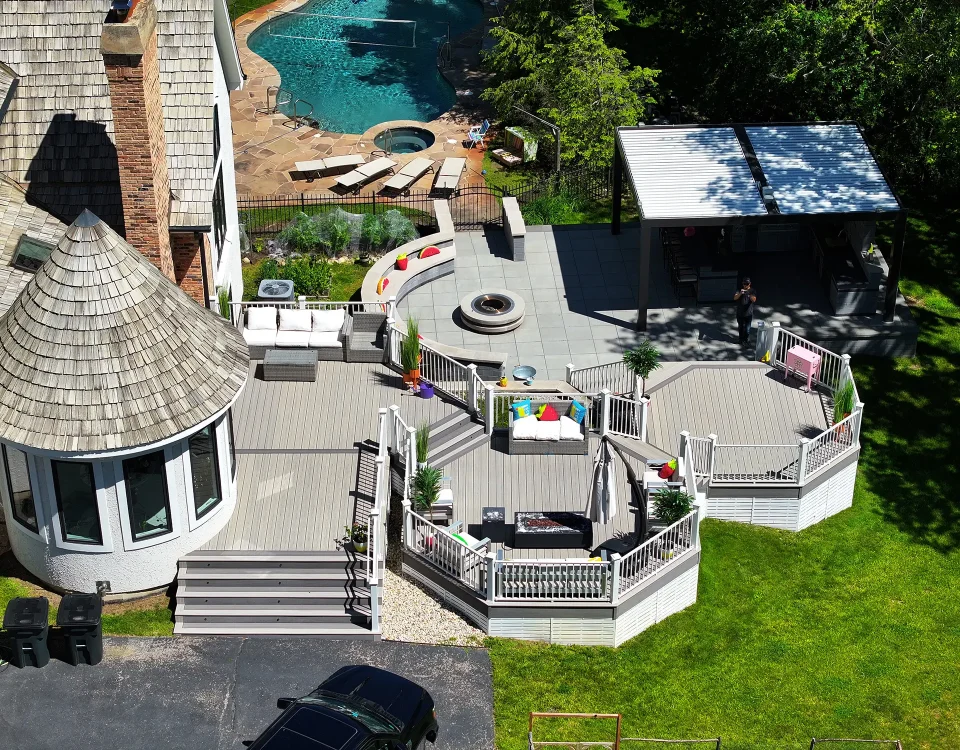
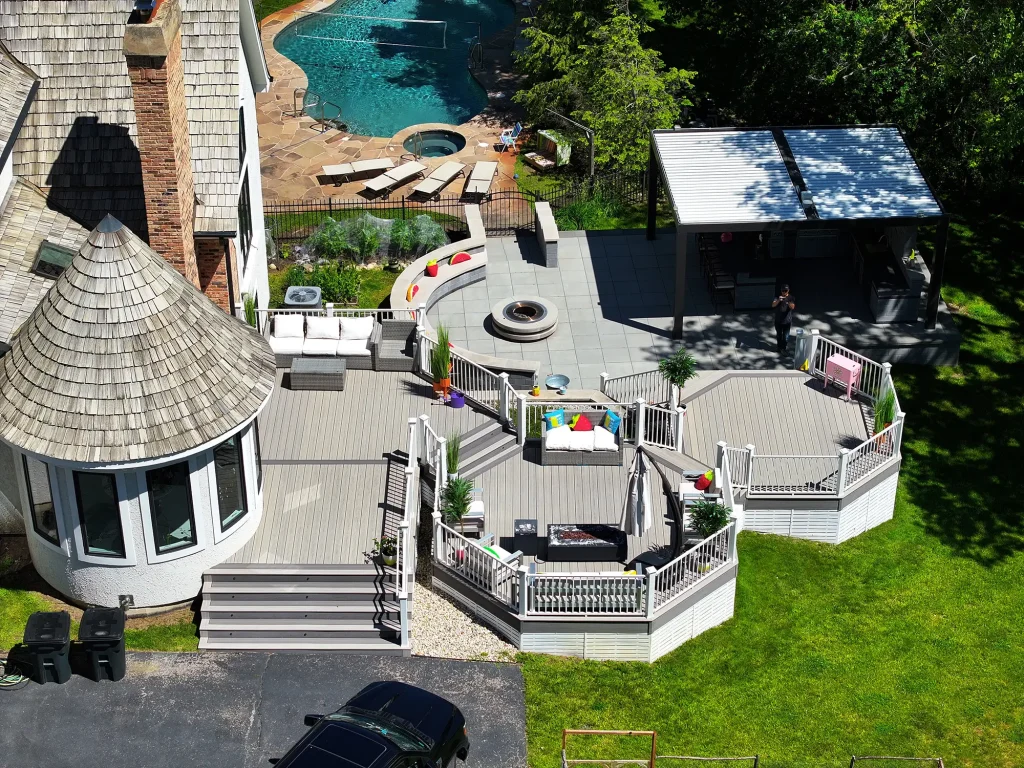
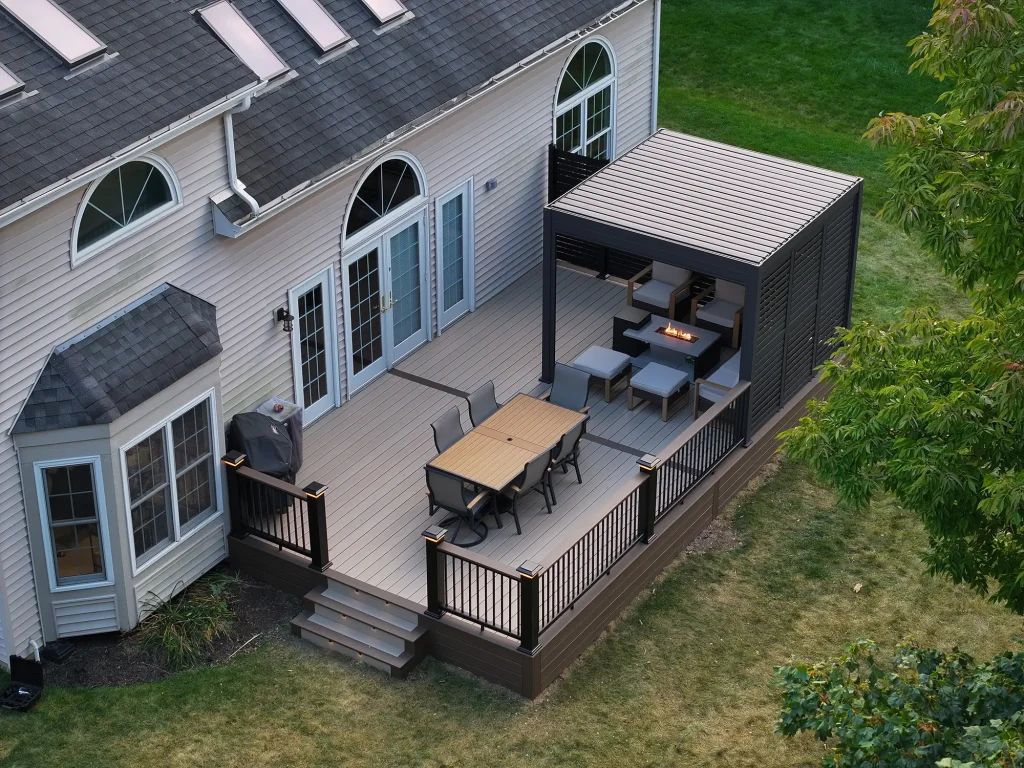
A better way to think about it is asking what the space needs to do across the whole year, not one weekend. A motorized louvered roof lets you open the slats for sun and close them when it rains, so the deck works in a downpour. Solar shades cut the late-afternoon glare on a west-facing yard. Add a heater and the season stretches into November. You don’t have to do all of it at once. But if you frame and wire the deck with those options in mind from the start, adding them later costs a fraction of what retrofitting does. Plan for the deck you’ll want in five years, not just the one you want in June.
2. Get the lighting right, because most people don’t
Lighting is the upgrade homeowners skip and then regret. A deck with no light plan is a deck you stop using at sunset. Done well, it doubles the hours you actually spend out there.
The trick is using light at a few different levels instead of one bright fixture blasting everything. Something soft and general so you can see. Something brighter where you cook or eat. And a few low lights tucked into the stairs and railings, which is as much a safety thing as a look. Low-voltage LED runs cheap, lasts for years, and stays cool to the touch, which matters when it’s built into a step a kid might grab. If you want the technical side, the U.S. Department of Energy’s guide to energy-efficient lighting design covers fixtures, controls, and why LED outdoors makes sense. One honest caveat: stair and riser lights are far easier to run while the deck is being built than to add after, so decide on lighting before the boards go down, not after.
3. Pick materials for how they age, not how they look new
Everything looks good on day one. The question is what your deck looks like after five Midwest winters of snow sitting on it and the ground freezing and thawing underneath.
Composite, pressure-treated lumber, aluminum railing, the fasteners holding it together, they all behave differently over time and under our weather. Composite costs more up front and skips the yearly staining. Wood costs less and asks for that maintenance every season, and it’ll gray and splinter if you skip it. Neither is wrong. They’re just different deals. I get into the real tradeoff, including the few cases where wood is still the right call, in why we talk most homeowners out of a wood deck. Whatever surface you pick, remember the frame underneath is usually still wood, and that’s the part that fails first if it isn’t built right.
4. Build storage in so the clutter disappears
Nothing kills the look of a nice deck faster than a pile of cushions, a hose, and a folded umbrella shoved in the corner. It happens to everyone, because outdoor stuff needs to live somewhere.
The fix is designing the storage into the deck instead of buying a plastic bin later. A bench with a hinged lid holds cushions and grill tools out of sight. A built-in deck box does the same along a railing. When it’s part of the build, it reads as a feature instead of an afterthought, and your deck stays looking the way it did the day we left.
5. Think about the deck as something you’ll sell with someday
The best upgrades pay you back twice. Once while you’re using them, and again when you sell. A deck that fits the house and the lot, built to last, is the kind of thing buyers notice and appraisers credit.
So before you start, think a little past this summer. How will the space hold up in ten years? What will maintenance look like by then? Would the next owner see it as a feature or a project they’d have to redo? Spending a bit more on design and build quality up front tends to be the part you’re glad about later, not the part you regret.
None of this requires tearing up the backyard
People assume making a deck better means starting over. Usually it doesn’t. A lighting plan, a smarter material, a roof you can close, some hidden storage. Small moves, done with a little forethought, change how much you actually use the space.
After years of building decks around Naperville, the pattern is always the same. The backyards people love aren’t the most expensive ones. They’re the ones designed for how the family really lives, with an eye on how they’ll age. We’re deck builders Naperville homeowners have trusted since 2018, and if you’ve got questions about materials, warranties, or whether your current deck can be upgraded instead of replaced, we lay a lot of that out on our deck builders FAQ.
Want someone to walk your space and talk through what’s worth doing? Reach out for a free on-site consultation and we’ll come take a look.
Wolf Spirit Deck. Licensed Illinois deck contractor serving Naperville, Aurora, Plainfield, Lisle, Hinsdale, and the western Chicago suburbs.